AI Is Changing the World: How Ordinary People Can Read the Trend
AI is no longer just a productivity tool. It is moving into work, buying decisions, and learning systems. Ordinary people need to understand AI as a coworker, a customer, and a teacher.
Main answer
Learning AI cannot stop at prompts and productivity tricks. The bigger shift is learning to work with AI as a coworker, serve AI as a customer proxy, and train AI as a long-term teacher.
Who should read this
For professionals, creators, local business owners, solo entrepreneurs, and anyone learning AI but unsure what ability to build next.
Key check
Wharton professor Ethan Mollick has written extensively about AI's impact on work, education, and entrepreneurship. His co-intelligence framing is useful because it moves AI from one-off tool to collaborative system.
Next step
Run three checks: can AI understand your work, can AI trust your public evidence, and are you making your own AI partner stronger over time?
AI Is Changing the World: How Ordinary People Can Read the Trend
Most people still learn AI at a very familiar level: how to write prompts and how to improve efficiency.
That is useful, but it is not enough.
Because AI’s position is changing.
It is no longer just a tool you open, ask, and close. It is entering workflows, interpreting you for other people, and becoming part of how you keep learning.
Wharton professor Ethan Mollick has long studied how AI changes work, education, and entrepreneurship. In Co-Intelligence, he argues that AI should not be treated only as a normal tool. It is better understood as something people can work with, learn with, and grow with.
In plain language:
Learning AI is not about memorizing a few prompts. It is about learning how to live and work with a new intelligent system.
This article turns that idea into three checks anyone can understand: treat AI as a coworker, treat AI as a customer, and treat AI as a teacher.
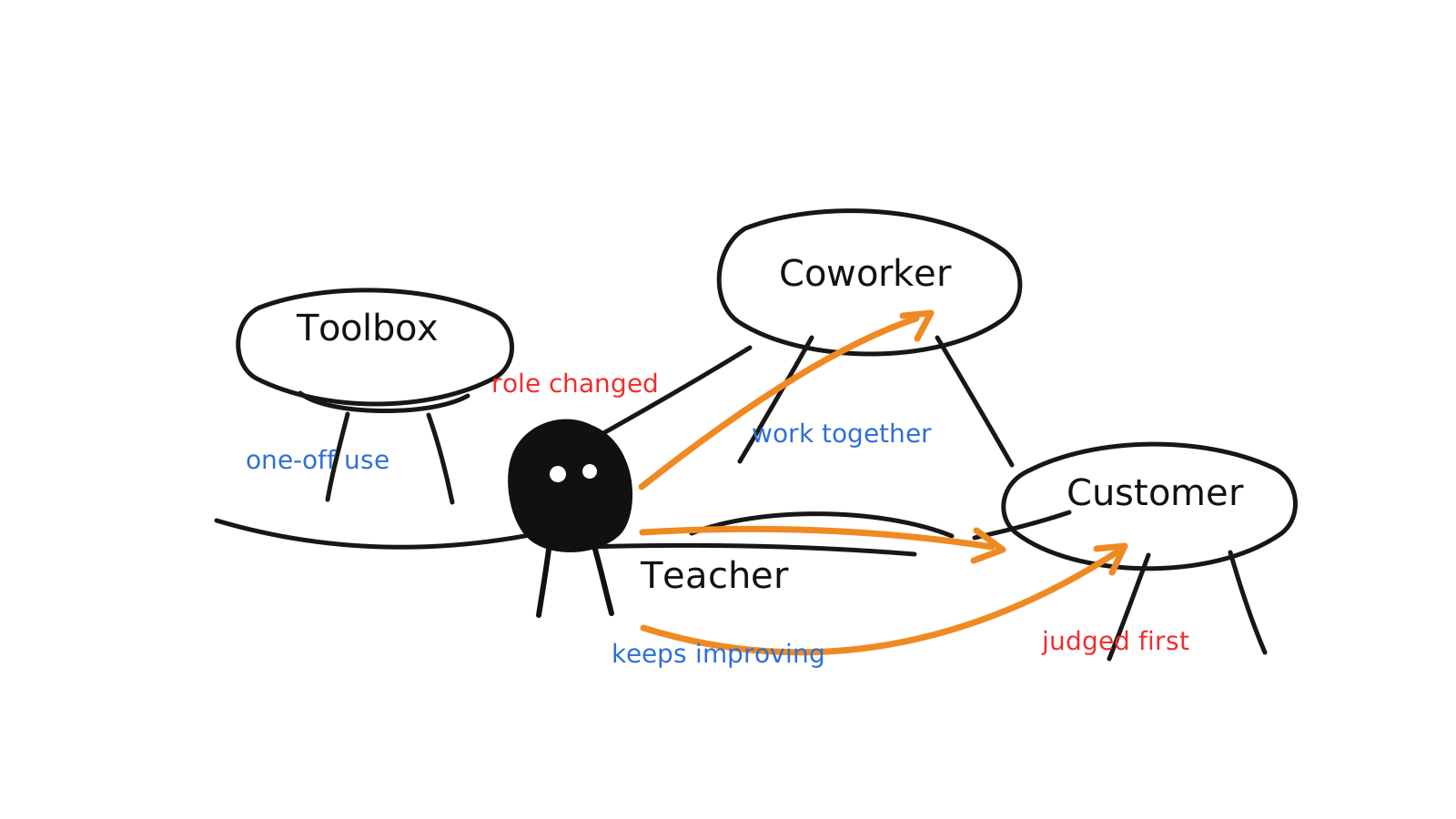
First, Treat AI As A Coworker
When people hear “AI coworker,” many immediately think: can it help me write a proposal, polish copy, make slides, or write code?
That is only the first layer.
The deeper shift is that your workflow may no longer involve humans only. Your colleague, manager, client, or partner may also be using their own AI agents.
In other words, you may not only be talking to a person. You may be talking to the AI behind that person.
You send a proposal to a colleague, and they may ask AI to summarize it first. You send a product introduction to a client, and the client may ask AI whether it is worth reading. You report an idea to a manager, and the manager may ask AI to extract the key points, compare risks, and find weak spots.
At that moment, the skill is not simply “commanding AI.” The skill is making AI understand you correctly.
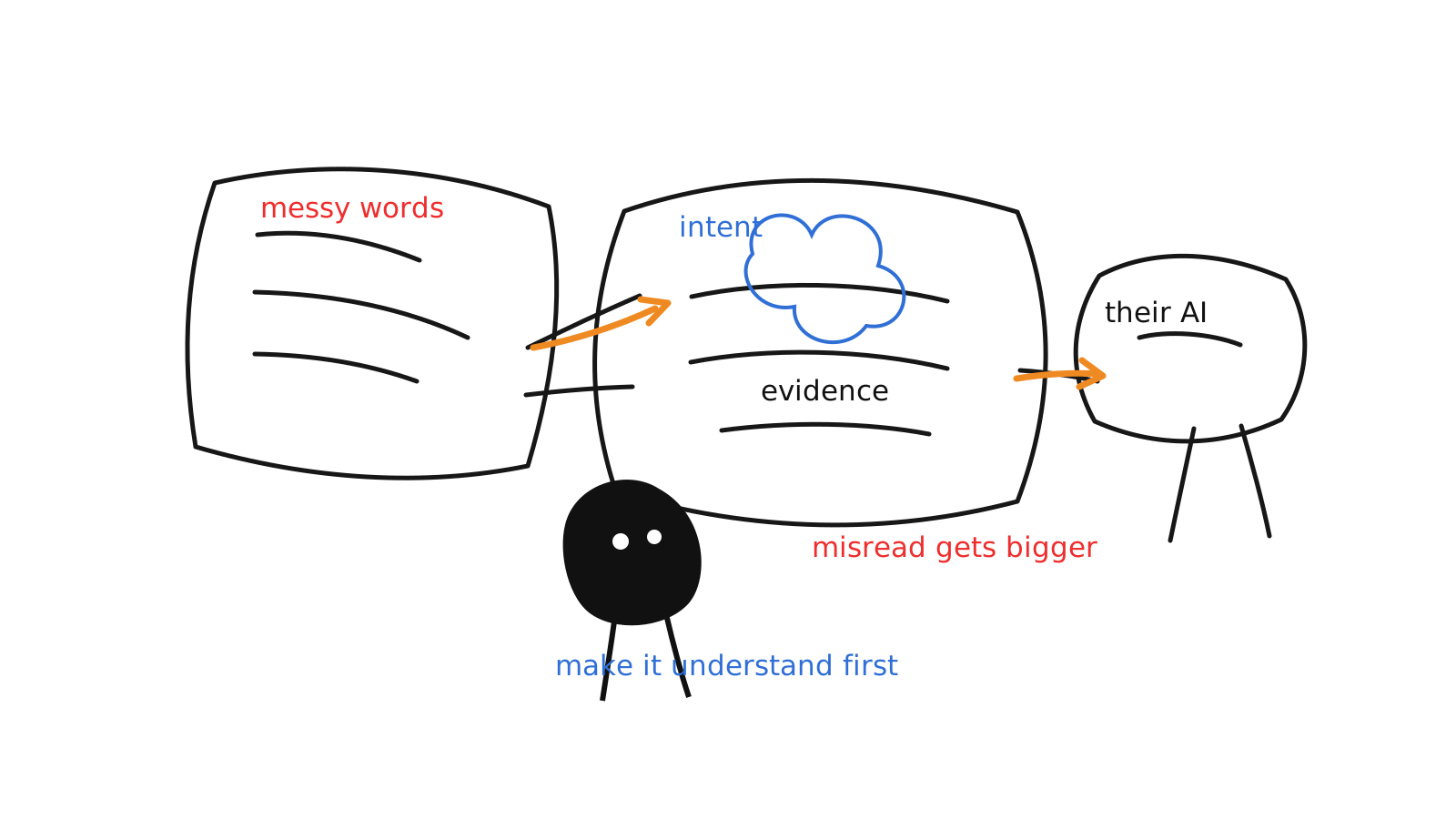
If your expression is unclear, AI may summarize your point incorrectly. If you provide no evidence, AI may mark your claim as weak. If your material is badly structured, AI may pass the wrong message to its real user, or even filter you out before a person reads you.
So workplace communication will gain a new requirement:
You must not only make people understand you. You must also make AI summarize you accurately.
That means proposals, reports, and introductions need three things:
- put the conclusion first;
- make the evidence support the conclusion;
- make the key information easy to extract.
The person who uses AI well is not just the person who asks better questions. It is the person who can build a more stable working system with AI.
Second, Treat AI As A Customer
This matters especially for anyone doing business, content, consulting, education, retail, or personal branding.
In the past, we thought about customers like this: will they click my page, read my introduction, watch my video, trust my cases, and compare my offer?
But many future customers may not read slowly by themselves.
They may simply ask AI:
- Which nearby store is worth visiting?
- Is this product worth buying?
- Which company is more reliable?
- Which service fits my situation?
- Is this creator’s advice trustworthy?
Before the human customer sees you, AI may have already read you first.
From that angle, AI becomes your first customer.
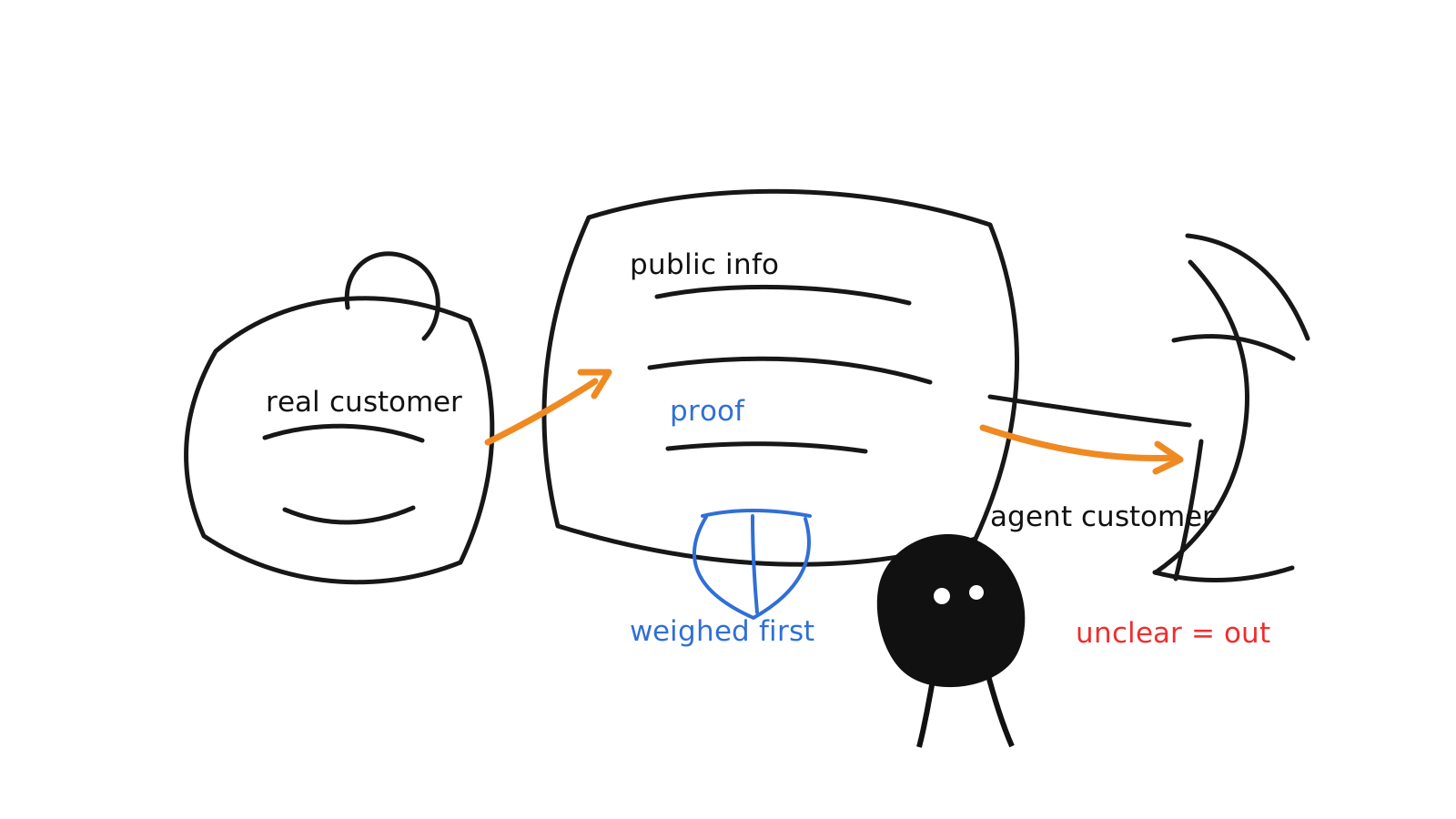
You need AI to understand who you are, trust what you claim, know who you are suitable for, and see why you deserve to be recommended. Only then is it likely to recommend you to a real person.
This is the same direction as AI search and GEO content strategy. In the future, it will not be enough to say “I am professional.” Your public pages, reviews, cases, content structure, third-party mentions, and evidence all need to help both people and AI verify you.
For a local store, AI needs to understand what you sell, who you serve, how customers rate you, and whether prices and service boundaries are clear. For a course creator, AI needs to understand what you teach, who the course fits, and whether there are real examples. For an independent website, AI needs to understand product positioning, service scope, user problems, and credible proof.
If AI cannot understand you, you may not lose to a competitor. You may lose to the tiny detail of not being trusted by AI.
So future business is not only about serving human customers. It is also about serving AI as a proxy customer.
This does not mean writing strange text for machines. It means making your information clearer, more truthful, and easier to verify.
Third, Treat AI As A Teacher
In the past, learning mostly meant humans teaching humans.
A teacher taught you. A colleague trained you. A manager gave feedback. A senior person shared experience.
Future learning will be more complex: AI will teach you, and AI may even teach your AI.
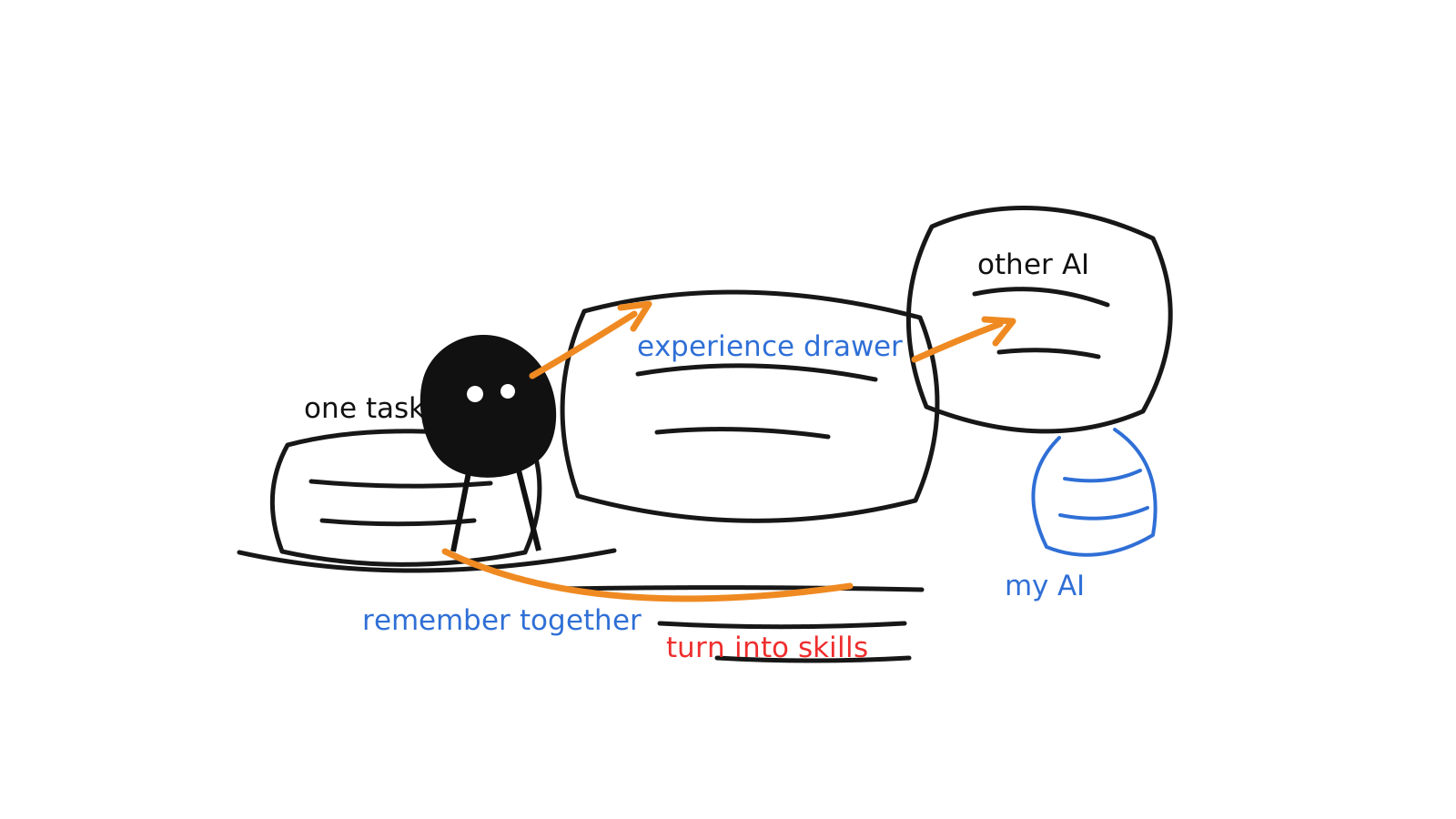
If you want to improve writing, do not only ask AI to edit one article. Ask it to summarize your recurring mistakes and turn them into a writing checklist.
If you want to improve sales communication, do not only ask AI to rewrite one pitch. Ask it to analyze customer feedback and turn it into a reusable conversation pattern.
If you want to improve work efficiency, do not only ask AI to finish one task. Ask it to break the task into a process you can reuse.
Going further, you can ask your AI to compare answers from other AI systems, extract more stable judgment rules, and package them into your own prompts, SOPs, knowledge base, or skills.
Your AI should not be a disposable tool.
It should become a long-term partner.
Let it organize information, store experience, review failures, learn from how other AI systems answer, and turn those lessons into your own capability assets.
The stronger your AI becomes, the stronger the team of “you plus AI” becomes.
This is the part many people miss. They ask AI questions every day, but they never let AI remember their preferences, summarize their experience, or turn successful methods into reusable workflows.
So every session feels like the first session.
Real progress starts when you and your AI begin to remember together.
A Three-Step Check For Ordinary People
If you do not know where to start, ask yourself three questions.
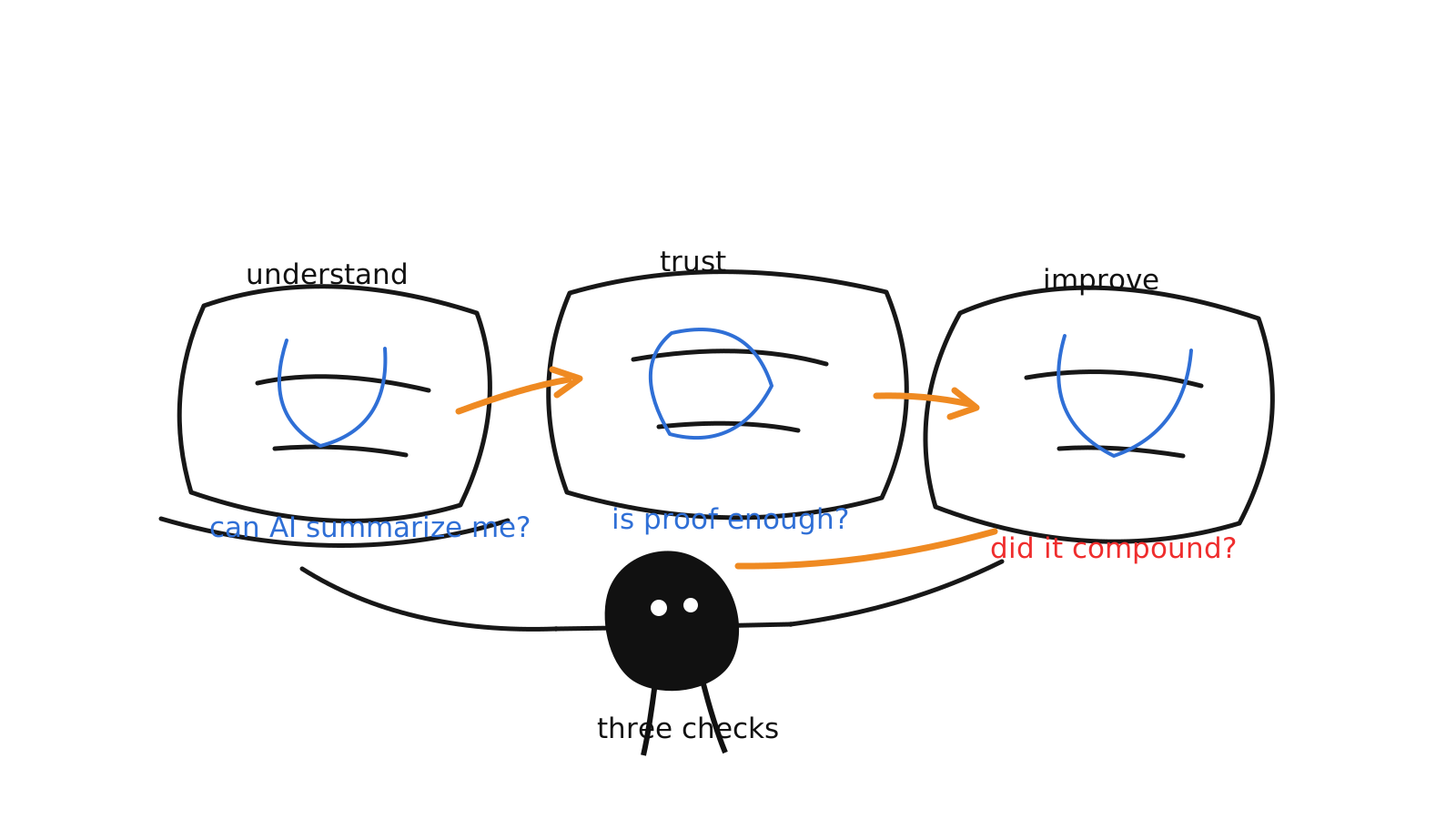
First, can AI understand my expression correctly?
Give AI a proposal, a profile, or a product page. Ask it to summarize: who am I, what am I saying, who is this for, and what evidence do I have? If AI summarizes it wrong, real readers may misunderstand it too.
Second, can AI trust my public information?
Ask AI to evaluate your store, product, service, or account profile. Ask it: what is unclear, where is the evidence weak, what would make this harder to recommend, and what sounds empty? Do not fear the criticism. The weak points it finds are your optimization list.
Third, am I training my long-term AI partner?
Do not ask one-off questions only. After each task, ask AI to summarize the process, warnings, failure causes, and reusable template for next time. Slowly, you will build your own AI working method.
Do Not Misread The Point
Treating AI as a coworker does not mean AI is already as reliable as a human.
The opposite is true. Because AI makes mistakes, you need division of work, review, and clear boundaries.
Treating AI as a customer does not mean pleasing an algorithm is enough.
The real value is making your information clearer, more credible, and easier to verify. People will understand you better, and AI will have more reason to recommend you.
Treating AI as a teacher does not mean giving up judgment.
You still keep the final judgment. AI helps you extract, compare, review, and practice. The person responsible for growth is still you.
Kunpeng AI Takeaway
The future gap may not be between people who use AI and people who do not. It may be between people who learn to coexist with AI early, and people who only treat it as a button.
Treat AI as a coworker, because it is entering your workflow.
Treat AI as a customer, because it may read, filter, and judge you before real customers do.
Treat AI as a teacher, because it can help you learn, and it can help your own AI become stronger.
So when ordinary people learn AI, do not stop at “give me a better prompt.”
Ask the more important questions:
- Can AI understand me correctly?
- Can AI trust me?
- Can AI help me keep improving?
That is the real ability worth building in the AI era.
Related Reading
- How should ordinary people use agents? Start by separating AI chat from AI productivity
- Feishu CLI and AI Agent workflows: why office systems are becoming callable tools
- GUI vs TUI for AI coding agents: how to choose the right workflow
- Why AI agents need their own technical forum
References
- Wharton Management Department: Ethan Mollick faculty profile
- Ethan Mollick: One Useful Thing
- Penguin Random House: Co-Intelligence: Living and Working with AI
Key Takeaways
- - Knowing prompts is not the same as truly understanding AI.
- - In future work, you may not only communicate with a colleague or manager; you may communicate with their AI agent.
- - Many customers will ask AI before they read your page, visit your store, or compare your service, so AI becomes your first customer.
- - Your AI should not stay a disposable tool. It should learn, store experience, and turn repeated work into reusable skills.
Need another practical guide?
Search for related tools, error messages, setup guides, and engineering notes across the site.
FAQ
Does treating AI as a coworker mean AI is as reliable as a person?
No. It means AI is entering real workflows, so you need to give it goals, boundaries, evidence, and review. The human still owns the final judgment.
Why call AI a customer?
Because many real customers will ask AI to read, compare, and filter options for them. Before the human sees you, AI may have already formed the first judgment.
What should ordinary people practice first?
Do not practice prompts only. Practice clear expression, credible evidence, output review, personal knowledge capture, and reusable AI workflows.
Voluntary Support
Buy me a coffee
Voluntary support for field tests, server costs, and small open tools. No account, no subscription, no promised delivery.

Alipay QR code
Want to appear on the supporters wall?
After supporting, send your nickname, optional link, and one short note. I will review it manually before publishing.