Stop Copying Universal Prompts: Prompts, Context Engineering, and Markdown Explained
Prompts are not magic spells. This practical guide uses a doctor-visit analogy to explain useful information, context engineering, Markdown, zero-shot and few-shot prompting, and in-context learning.
Main answer
A prompt is not a spell that makes a model smarter. Results depend on useful information such as the goal, source material, constraints, and acceptance criteria, plus how the wider context is managed.
Who should read this
For people who are starting with large language models, have collected prompt templates, and still receive off-target answers or spend too much time revising them.
Key check
Zero-shot and few-shot describe how many examples are supplied; positive and negative examples describe what those examples teach; Markdown only structures the information.
Next step
For your next task, state the goal, material, constraints, and completion standard. As the task grows, manage prior messages, intermediate results, and new feedback as context.
What You'll Learn
- + Why prompts influence what a language model generates
- + The difference between prompts, context, and context engineering
- + What Markdown actually contributes to a prompt
- + How zero-shot, few-shot, positive examples, negative examples, and in-context learning relate
Stop copying “universal prompts” from the internet.
You can collect hundreds of them and still get an answer that misses the point.
You have probably seen an opening like this:
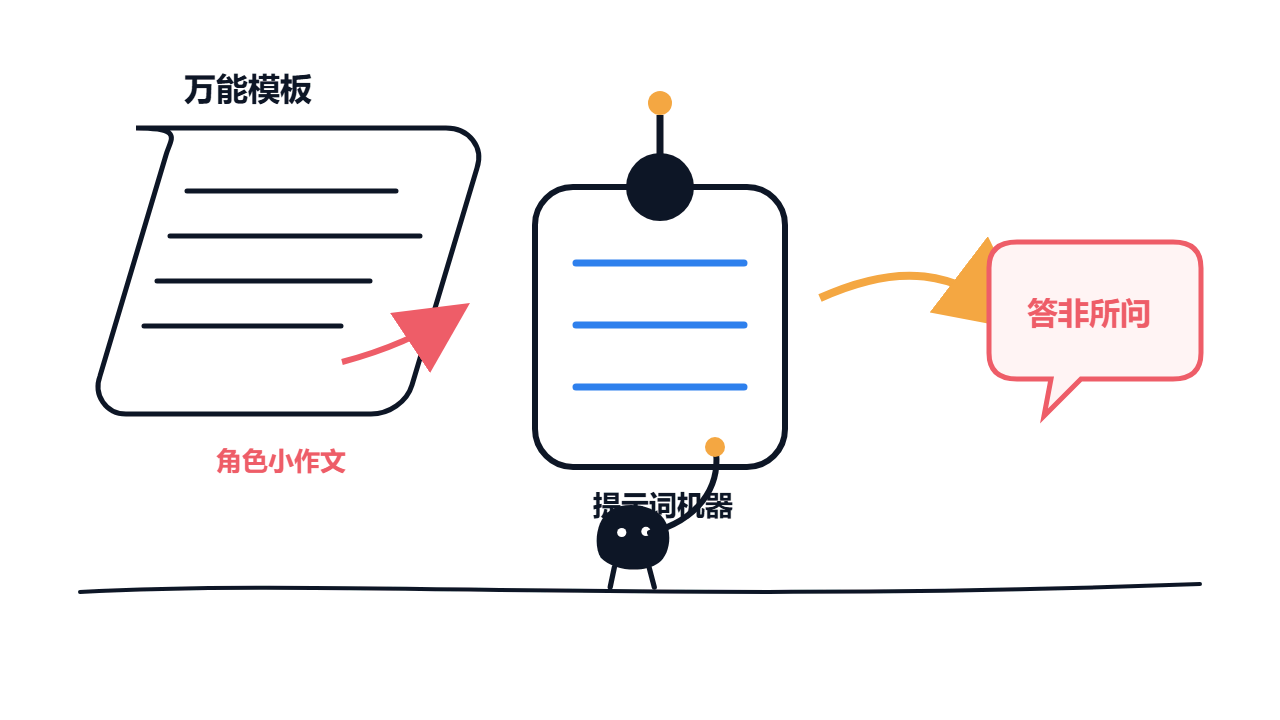
You are a senior copywriting expert who specializes in short-form video. Write a professional, rigorous, and engaging script for me…
Many people paste a long role description before every request, as if telling a model “you are an expert” installs an expert brain on demand.
It does not. The role can steer the angle, voice, or identity of the response, but it cannot supply a missing goal, source material, constraint, or acceptance criterion.
If you never explain who the video is for, what problem it should solve, or which facts it must preserve, an elaborate persona only produces an expert-sounding answer that still does not know what you need.
A prompt is not a magic spell. What matters is whether you provide information that helps achieve the task.
What is a prompt, and why does it affect a model?
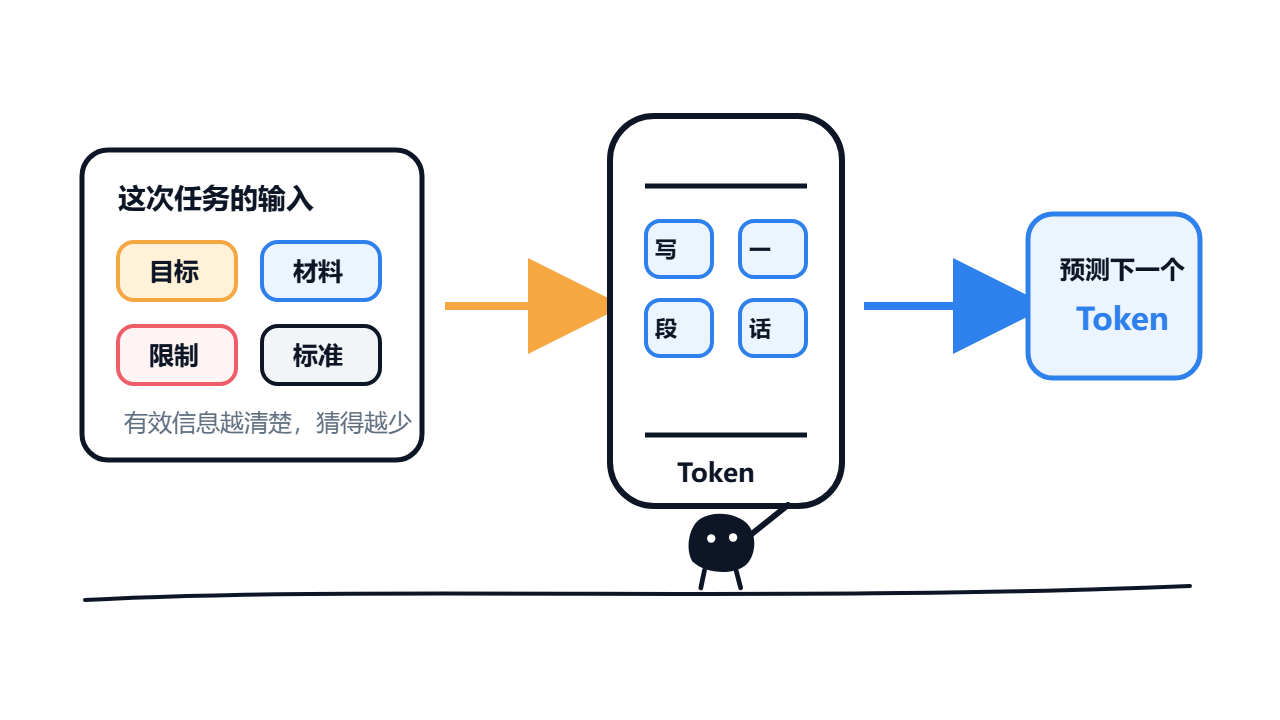
A prompt is simply the input you give the model for the current task.
It may be a sentence, a question, a document, or a complete task brief. The model combines that input with everything else it can currently see, then generates the response one token at a time.
A token is a small unit that a language model uses to read and write text. It does not always equal one character or one word. The model uses the preceding tokens to predict a suitable next token, then repeats that process.
That is why prompts matter. Your goal, facts, constraints, examples, and output requirements all change the direction of what the model generates next.
Earlier models were especially sensitive to wording, format, and examples. Two descriptions of the same task could produce very different results. People began systematically studying how to describe tasks, provide examples, and arrange output formats. That work helped prompt engineering become an important practice.
Modern models understand natural language more reliably, but that does not mean prompts have disappeared. The emphasis has changed: from stacking clever phrases to supplying useful information.
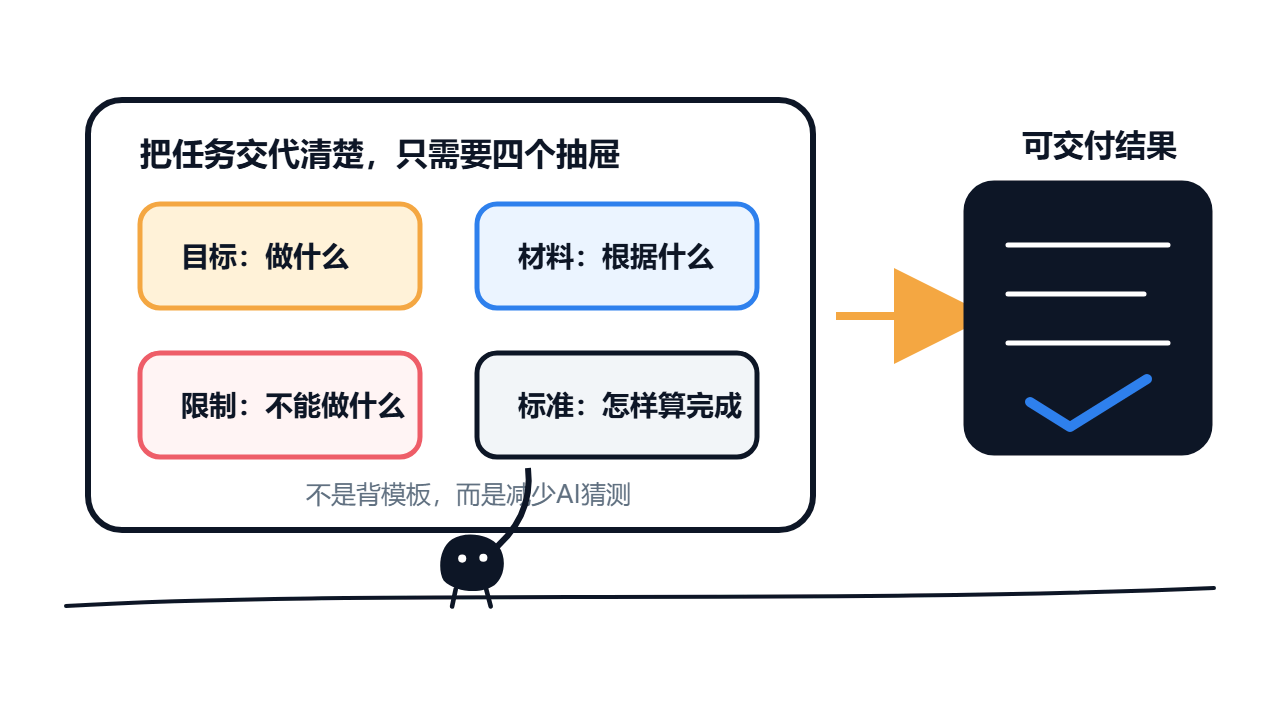
Instead of writing a 200-word persona, make four things clear:
- what the model should accomplish;
- which material it should use;
- which constraints it must respect;
- what standard the result must meet.
What counts as useful information? Think of a doctor visit
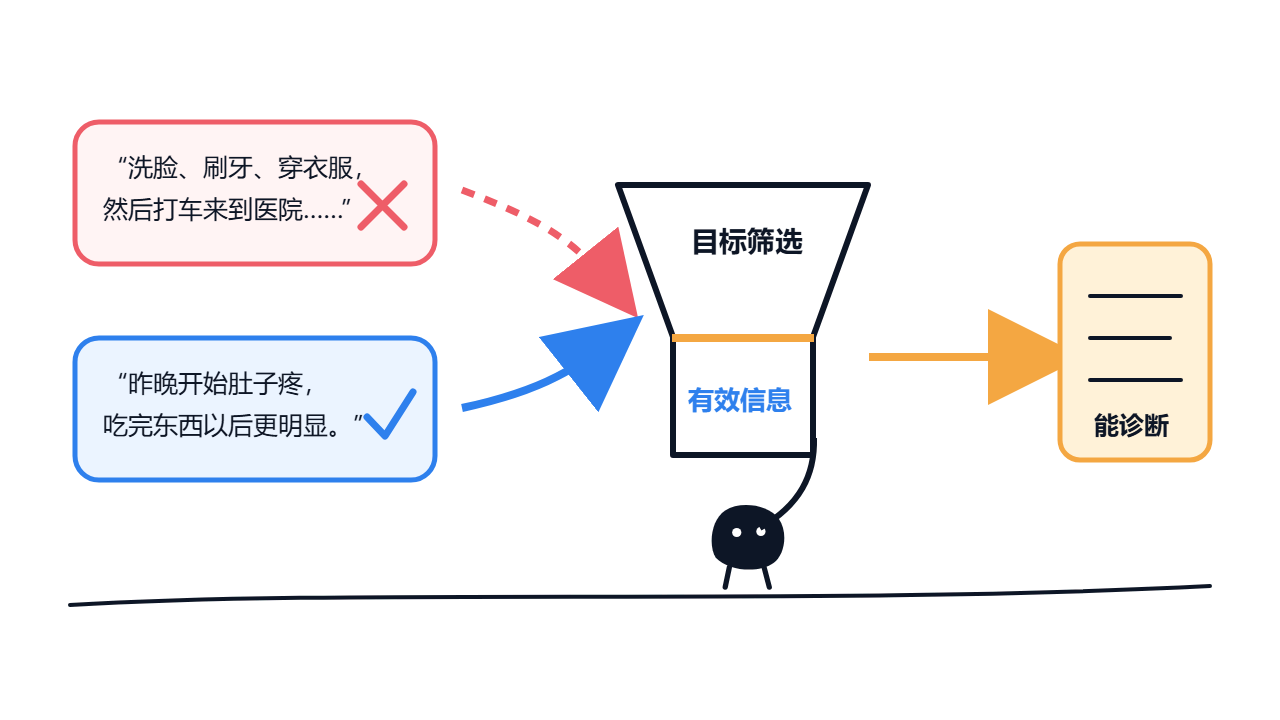
Imagine visiting a doctor. The doctor asks, “What feels wrong?”
You answer, “I woke up, washed my face, brushed my teeth, got dressed, and took a taxi to the hospital.”
That is information, but it does almost nothing to help the doctor identify the problem or treat it. For the current goal, it is not useful information.
Now suppose you say, “My stomach started hurting last night, and the pain becomes worse after I eat.” That information directly supports the diagnostic goal.
Both answers are inputs. In an AI conversation, both can be prompts. The difference is not whether they qualify as prompts; the difference is whether the information helps achieve the goal.
The same applies to AI.
“Write an article for me” is a prompt, but it leaves too much unspecified.
Compare it with this:
Write an introductory article of no more than 1,500 Chinese characters for office workers using AI for the first time. Base it on the interview notes I provide. Explain the difference between prompts and context without piling up jargon. After reading it, the audience should be able to write a task brief on their own.
There is no secret incantation in the second version. It simply supplies an audience, source material, constraints, and a result standard.
A good prompt is not necessarily longer. It has a higher density of information that is relevant to the goal.
How do prompts, context engineering, and Markdown relate?
Continue the doctor analogy.
To understand the stomach pain, the doctor may ask what you ate, whether your meals are regular, whether this has happened before, and what the test results show.
Once that information is recorded, the doctor does not need to ask every question again when you return with a blood-test result.
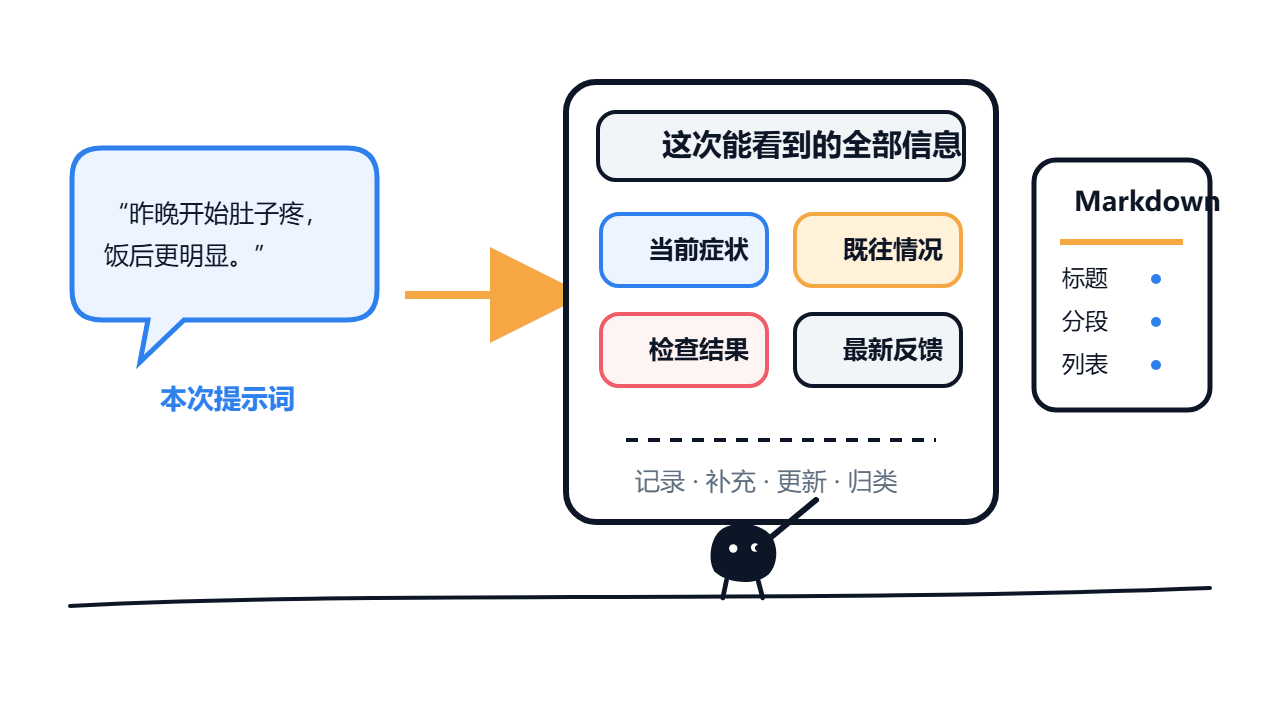
Everything available to the doctor during this diagnosis is analogous to the model’s context.
“My stomach started hurting last night” is the prompt you just gave. It is also part of the context. Previous records, test results, and the doctor’s earlier assessment can all affect the next decision.
After the visit enters the hospital system, someone must decide what to retain, how to categorize it, when to add test results, and how to update the record when something changes. That continuing work is a useful analogy for context engineering.
Where does Markdown fit?
Think of headings and sections in a medical record: background, symptoms, test results, and treatment plan. Markdown is a lightweight text format that uses headings, paragraphs, and lists to make structure easier for people and machines to see.
Markdown does not turn wrong information into correct information, and it does not make a model more intelligent. Its value appears when the input becomes longer: it separates different kinds of information and makes priorities and hierarchy clearer.
The relationship is straightforward:
- Prompt: what you specifically tell the model now;
- Context: everything the model can currently see;
- Context engineering: how information is selected, organized, added, and updated;
- Markdown: one formatting tool that keeps the information readable and structured.
Zero-shot, few-shot, positive examples, negative examples, and in-context learning
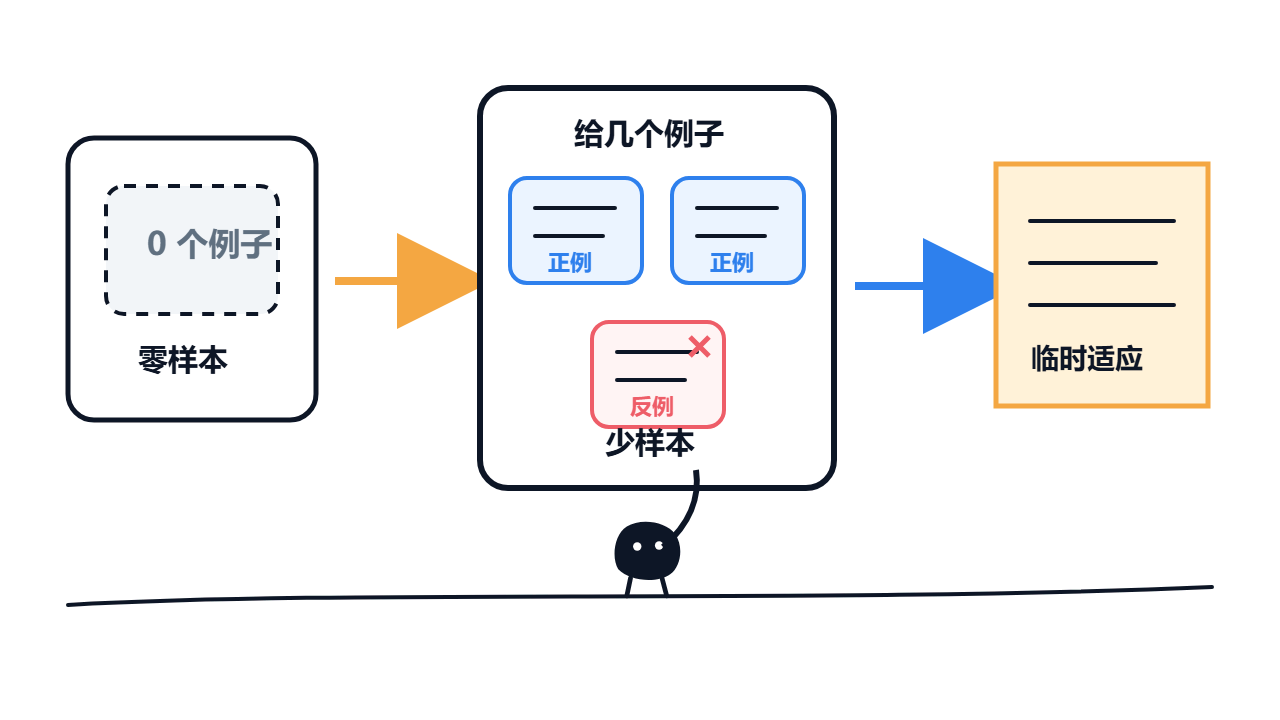
Suppose you say, “Write an opening for a short-form video,” without providing an example. That is zero-shot prompting.
If you give the model three openings you like and ask it to follow their structure and standard, that is few-shot prompting.
Examples that show what the model should do are positive examples.
You can also provide a weak script and label the problem explicitly: “Do not write like this. The sentence feels stiff because the opening has no concrete conflict.” That is a negative example.
There is an important trap here: if you provide a bad example without explaining what is wrong, the model may treat it as something to imitate.
So remember:
- zero-shot and few-shot describe the number of examples;
- positive and negative examples describe the role those examples play.
After seeing those instructions and examples, the model may temporarily exhibit the pattern you want. This is called in-context learning.
It does not retrain the model for your single request, and it does not directly change the model’s parameters. When the context is gone, the model has not permanently learned your private standard.
In-context learning and context engineering sound similar but describe different things. In-context learning is the model’s temporary adaptation to the current context. Context engineering is the work of selecting and managing the information supplied to that context.
This also clarifies what prompt engineering is really about. It is not a collection of magic phrases. It is the systematic design, testing, and improvement of task inputs so results meet requirements more consistently.
Should ordinary users still learn prompting?
Yes, but do not memorize templates.
For a simple task, use plain language.
“Reduce this paragraph to 100 Chinese characters and keep its three main conclusions” already contains enough information. It does not need an extra persona.
For an important task, provide all useful information.
At minimum, explain the goal, source material, constraints, and completion standard. Every missing item forces the model to guess, and more guessing usually means more rework.
For a complex task, do not focus only on the final prompt.
You also need to manage the documents, conversation history, intermediate results, and latest feedback the model can see. If the context contains outdated information, conflicting instructions, or irrelevant material, elegant wording at the end will not rescue the result.
You do not need to study Markdown as a separate course before using AI. Use normal language when the information is short. Add headings, sections, and lists when the task becomes larger.
If you remember only one short framework, use these four lines:
Goal: What should the AI accomplish?
Material: What must it use as evidence or input?
Constraints: What must it avoid or preserve?
Standard: What does “done” look like?
And remember these three distinctions:
A prompt explains the current request.
Context engineering manages what the AI can see for the task.
Markdown helps organize that information.
The stronger the model becomes, the less you need to memorize spells. The more complex the task becomes, the more carefully you need to supply useful information.
I am Laohui. We will keep turning AI concepts into practical ways of working and living.
Sources
- OpenAI: Prompt engineering
- OpenAI: Prompting
- Anthropic: Effective context engineering for AI agents
- CommonMark: Markdown Reference
- Brown et al.: Language Models are Few-Shot Learners
Some illustrations in this article were created with AI assistance.
Key Takeaways
- - Saying 'you are an expert' mainly steers viewpoint and tone; it cannot replace missing task information.
- - A prompt is the specific input you provide now, while context is everything the model can see for the current task.
- - Context engineering selects, organizes, updates, and supplies information across the task.
- - Markdown improves structure, but it cannot make incorrect information correct.
- - Use plain language for simple tasks; for important tasks, specify goal, material, constraints, and acceptance criteria.
Need another practical guide?
Search for related tools, error messages, setup guides, and engineering notes across the site.
FAQ
Is prompt writing still worth learning?
Yes, but the useful skill is not memorizing universal templates. It is supplying relevant information and managing the model's context as tasks become more complex.
Must every prompt use Markdown?
No. Natural language is enough when the information is short. Use headings, sections, and lists when the input becomes longer or has several layers.
Does assigning an expert role still help?
A role can clarify perspective, audience, and tone, but it cannot replace the goal, source material, constraints, examples, and acceptance criteria.
Voluntary Support
Buy me a coffee
Voluntary support for field tests, server costs, and small open tools. No account, no subscription, no promised delivery.

Alipay QR code
Want to appear on the supporters wall?
After supporting, send your nickname, optional link, and one short note. I will review it manually before publishing.