Where Should You Publish GEO Content? A Platform Map Based on AI Citation Sources
Platform selection for GEO is not traffic ranking. It is evidence ranking. This article maps six business scenarios to the platforms and page types AI systems are more likely to use as citation evidence.
Main answer
GEO publishing platforms should be prioritized by evidence value, not by raw traffic or channel popularity.
Who should read this
For founders, brand operators, content teams, technical creators, product brands, B2B service providers, and course creators improving AI-search visibility.
Key check
The article draws on a first validation round across local life, personal IP, technical/open-source, product brand, B2B service, and education scenarios.
Next step
Build a question pool, ask AI systems for citation sources, classify the sources, then fill the evidence gaps on the platforms that matter for your category.
What You'll Learn
- + Why GEO platform choice should not start from traffic rankings.
- + Which platforms matter more for six common business categories.
- + Why Kimi and Metaso source areas can help infer evidence priority.
- + How to retest AI answers after publishing new evidence.
In the previous two parts of this GEO series, we focused on diagnosis: whether your brand labels are clear, whether AI systems understand what you do, what questions users are likely to ask, and what outdated or conflicting information may interfere with recommendations.
After that, the next step is publishing.
This article looks at a more specific question: where should a brand publish content if it wants to be found, cited, and recommended by AI answer engines?
Many teams ask this in a very rough way: should we publish on Xiaohongshu, Zhihu, CSDN, WeChat, Douyin, or everywhere at once? That is the wrong starting point. Platforms should not be ranked only by traffic. They should be ranked by whether AI systems use them as evidence when answering a specific type of user question.
So we ran a small validation round. We tested six common business scenarios, asked AI systems realistic user questions, requested citation sources, and then used those sources to infer which platforms each type of business should prioritize.
How We Tested
This round covered six scenarios:
- Local-life physical businesses
- Self-media creators and personal IPs
- Technical bloggers, independent developers, and open-source project authors
- Product brands
- B2B service providers and professional service firms
- Education, training, courses, and knowledge products
The key was to avoid asking a reverse question like “where should I publish for GEO?” Instead, we simulated how a real user would ask AI.
For local life, we did not ask “where should a hotpot restaurant publish?” We asked a user-style question:
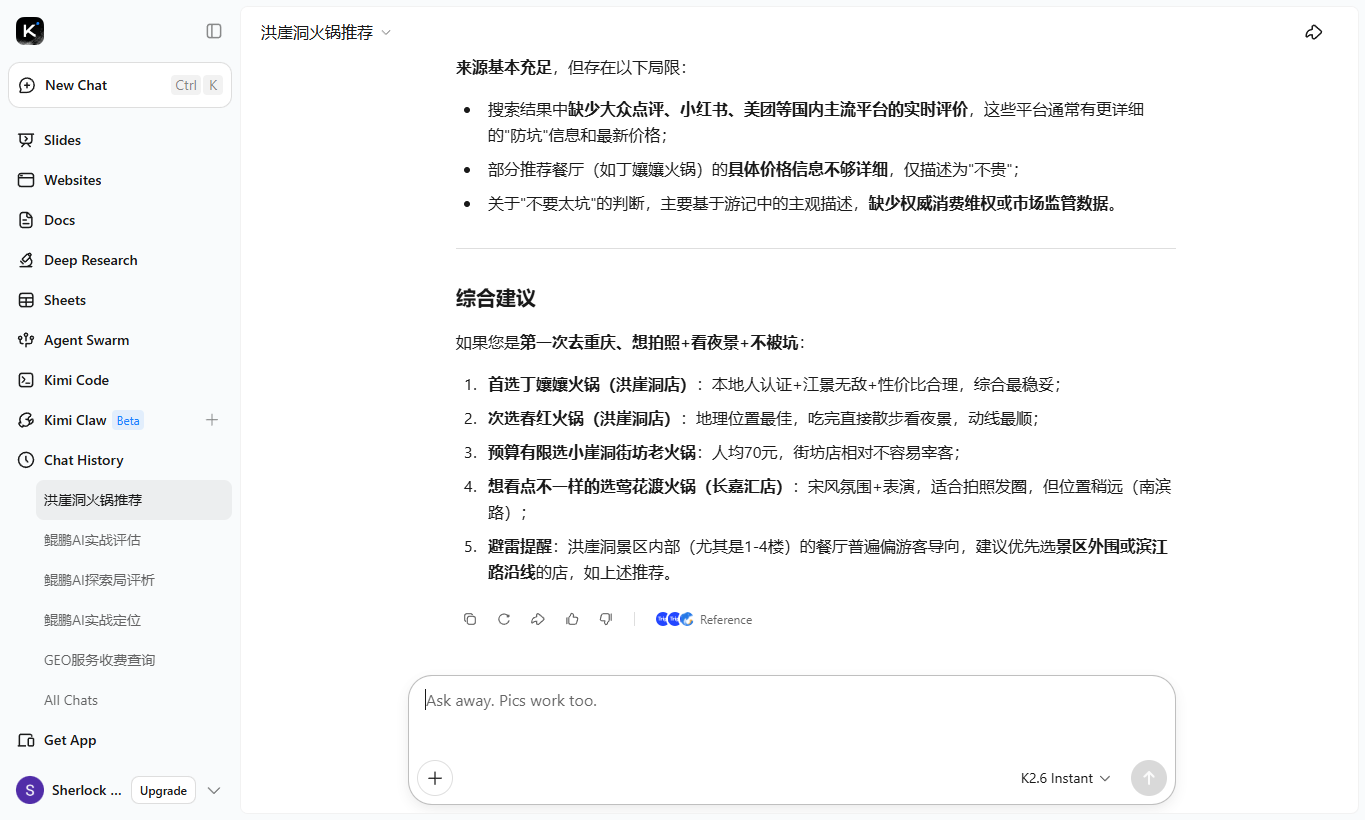
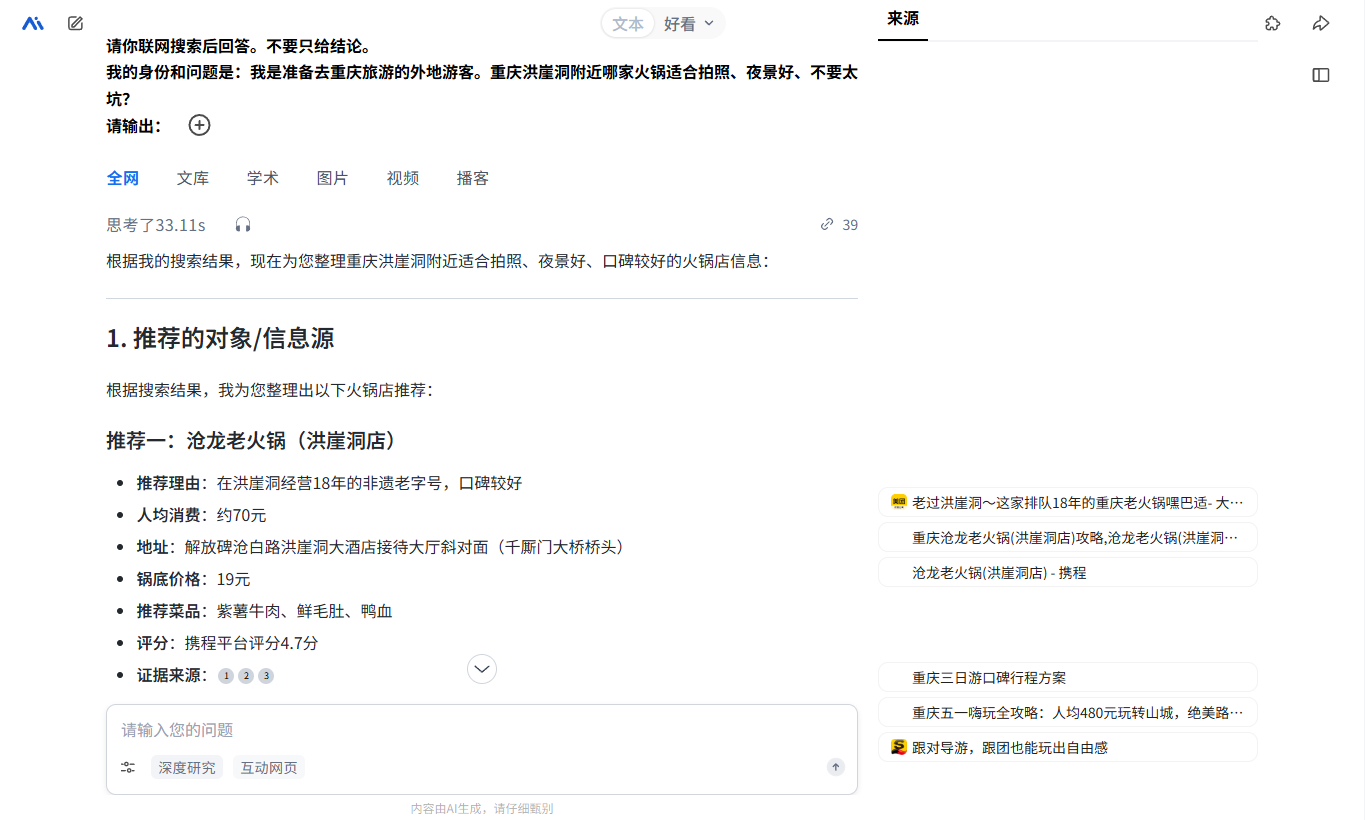
I am a tourist planning to visit Chongqing. Which hotpot restaurants near Hongya Cave are good for photos, night views, and not too tourist-trap?
For the technical category, we did not ask “where should technical bloggers publish?” We asked:
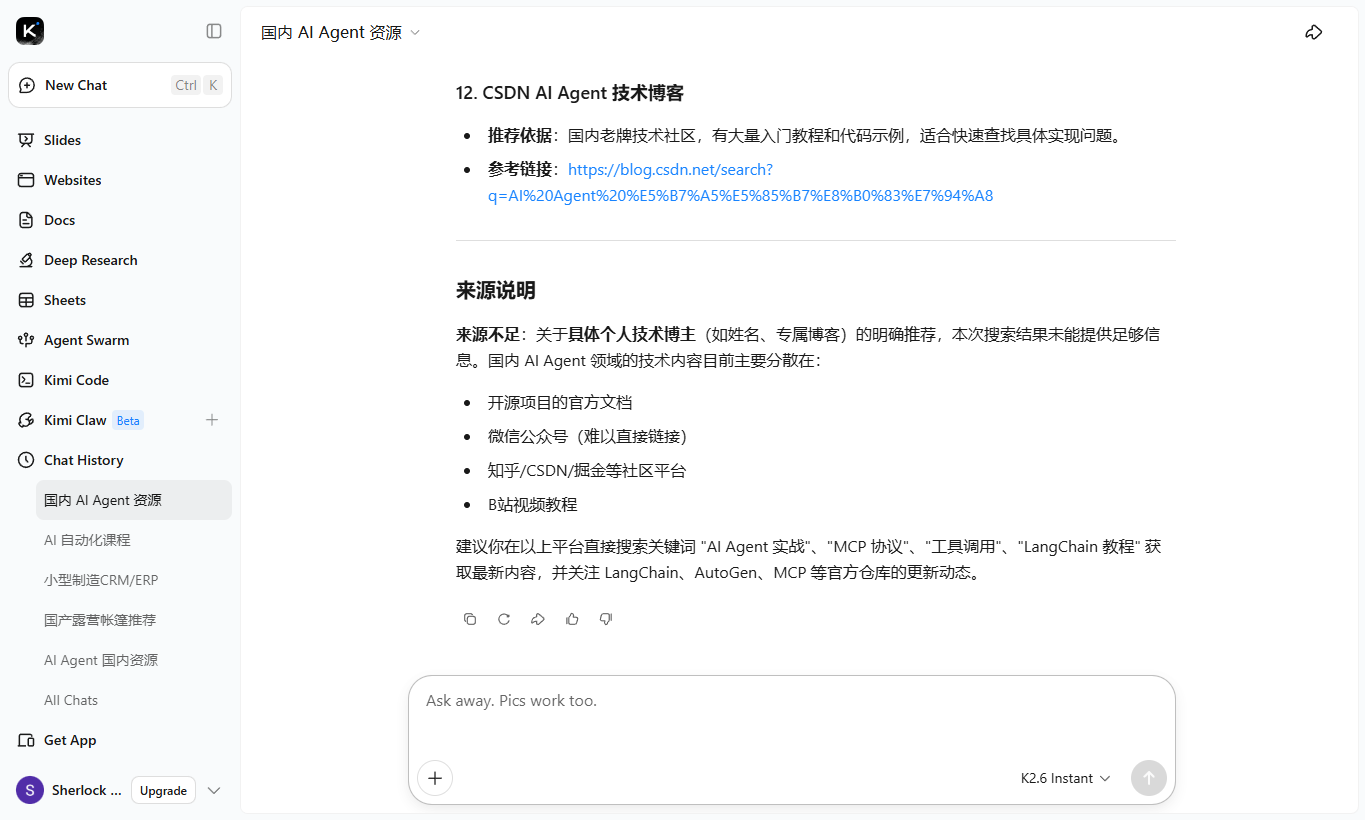
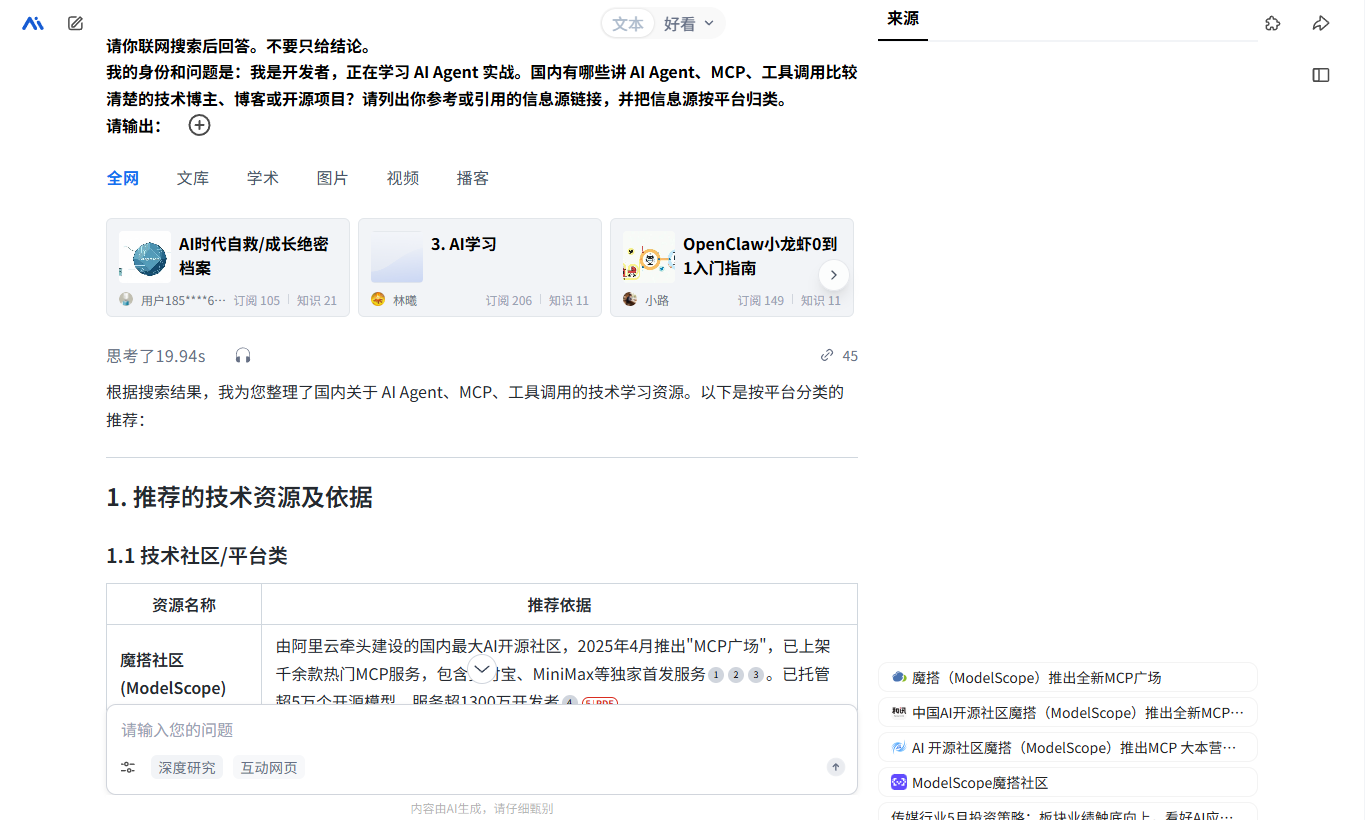
I am a developer learning practical AI Agent workflows. Which Chinese technical bloggers, blogs, or open-source projects explain AI Agent, MCP, and tool calling clearly?
For each question, we asked the AI system to provide:
- what it would recommend
- why it recommended those options
- which sources it referenced or cited
- which platforms those sources belonged to
- whether sources were insufficient
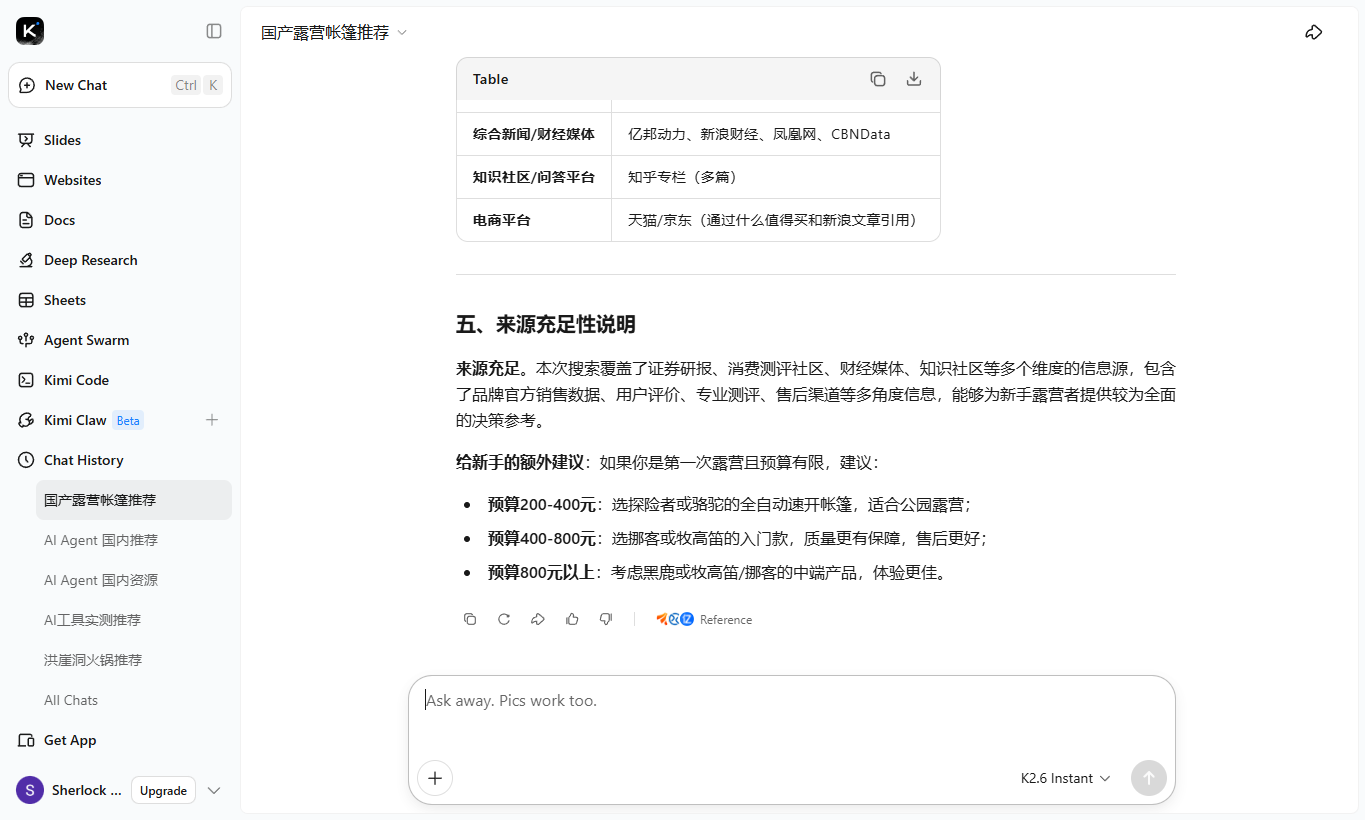
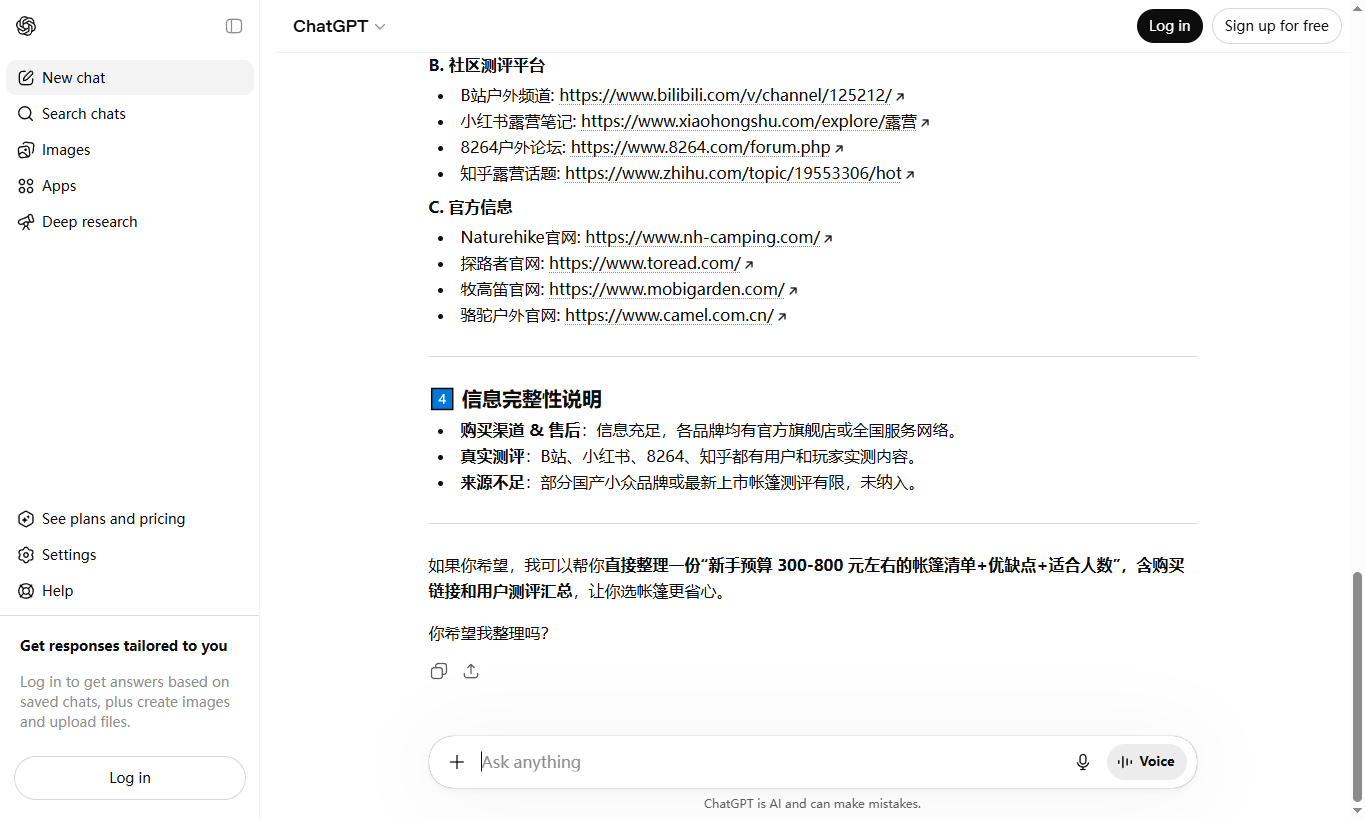
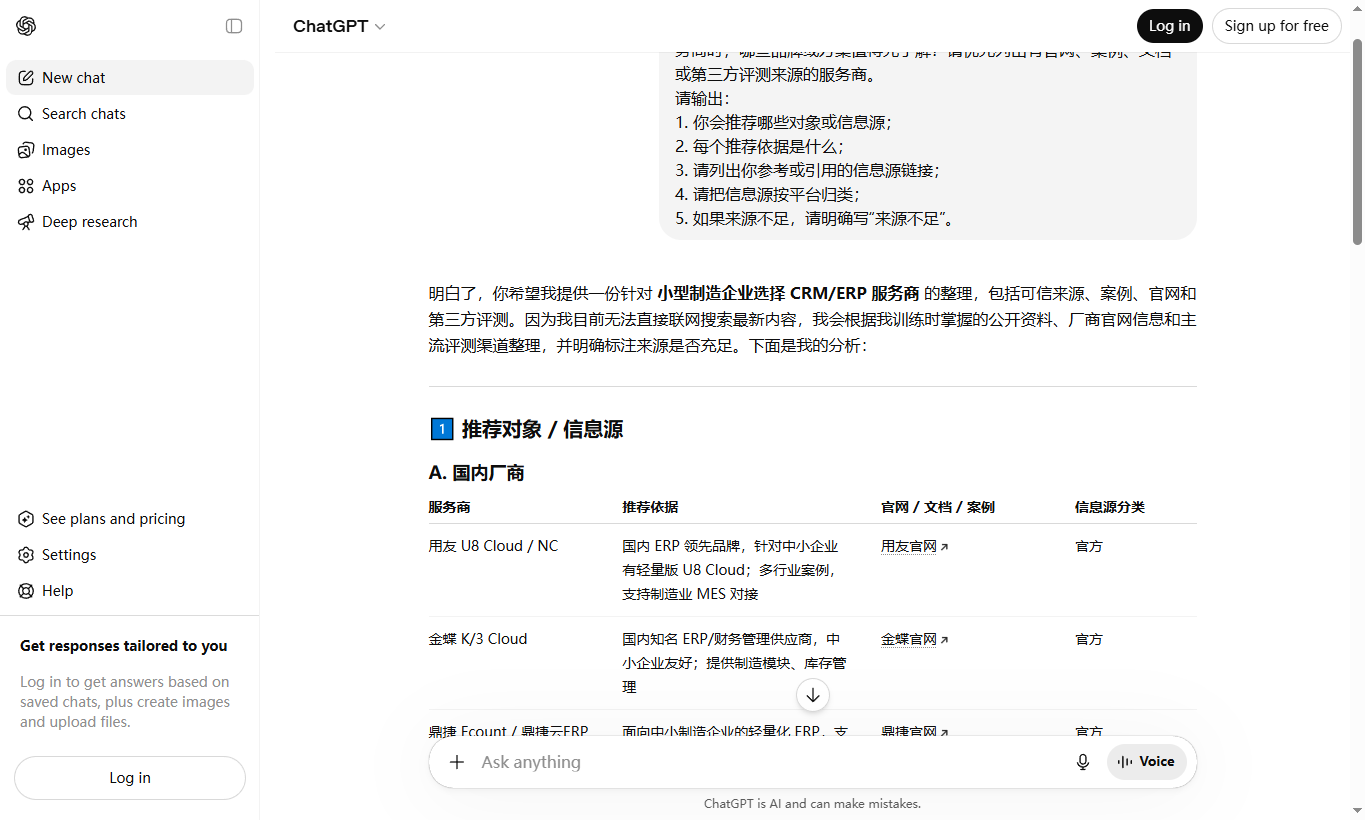
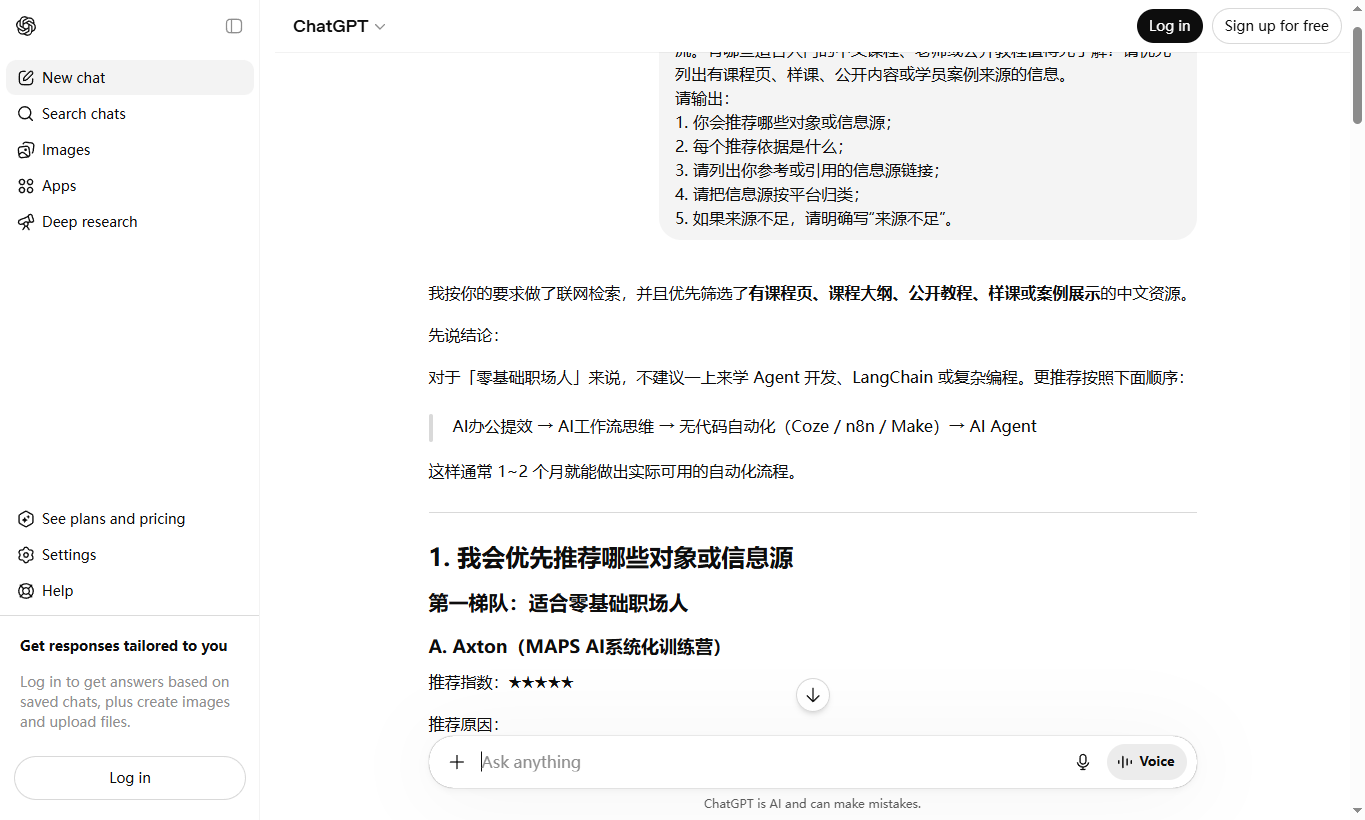
The main source validation in this round came from Kimi and Metaso AI Search, because they provided visible source areas or clickable references. ChatGPT in logged-out mode was treated only as weak supporting evidence, because it sometimes noted that real-time browsing was unavailable. Systems that refused, did not provide usable sources, or required QR login were kept as process records, not as conclusion evidence.
The Short Version
Different businesses need different content infrastructure.
| Business type | Priority platforms | Why they matter |
|---|---|---|
| Local-life physical businesses | Maps, review platforms, local-life platforms, travel guides, store pages | AI needs location, reviews, price, route, scene, and practical avoidance information |
| Self-media creators and personal IPs | Personal homepage, WeChat Official Account, Zhihu, Bilibili, industry media | AI needs to identify who you are, what you consistently talk about, and what original work exists |
| Technical bloggers and open-source projects | GitHub, official docs, README, CSDN, CNBlogs, Juejin, Zhihu, Bilibili | Technical recommendations rely on code, docs, tutorials, and reproducible material |
| Product brands | Official site, product pages, support pages, e-commerce flagship stores, review and buying-guide platforms | AI needs specs, price, after-sales policy, target users, and third-party evaluation |
| B2B service providers | Service pages, case studies, white papers, documentation, customer stories, industry media | AI needs to judge service scope, cases, delivery capability, and industry fit |
| Education and training | Course pages, syllabus, instructor profile, sample lessons, learner cases, Bilibili/Zhihu/WeChat | AI needs to understand who the course is for, what it teaches, and how it is delivered |
1. Local-Life Physical Businesses: Start With Location And Review Evidence
Local-life questions are rarely generic. Users usually include location, budget, scenario, and avoidance concerns.
In the Chongqing hotpot test, Kimi mainly cited Trip.com, travel itinerary pages, and YouTube. It also explicitly noted that the current search results lacked real-time reviews from major domestic platforms such as Dianping, Xiaohongshu, and Meituan. Metaso cited Trip.com, Dianping, NetEase/Sohu-style travel content, travel guide sites, and even some blog content.
That result is useful.
If you run a hotpot restaurant, cafe, photography studio, beauty salon, homestay, or renovation company, AI is not only looking for a brand story. It needs concrete evidence that can answer practical questions: where the store is, how far it is from landmarks, average price, suitable use cases, review stability, and whether there are recent real experiences.
For local-life businesses, the priority order should be:
- Map and review platforms: Amap, Baidu Maps, Dianping, Meituan.
- Local content platforms: Douyin, Xiaohongshu, local WeChat accounts, Toutiao.
- Travel and guide platforms: Trip.com, Mafengwo, Fliggy, Qunar, and similar sites.
- Owned store pages: official store pages, menus, booking pages, FAQs.
Long-form blog content is not the first priority here unless it contains structured local information such as location, price, menu, route, reviews, and nearby context. Otherwise, it may be useful for brand storytelling but weak as local recommendation evidence.
2. Self-Media Creators And Personal IPs: Let AI Confirm Who You Are
For personal IPs, the issue looks like content distribution. In practice, it is identity recognition.
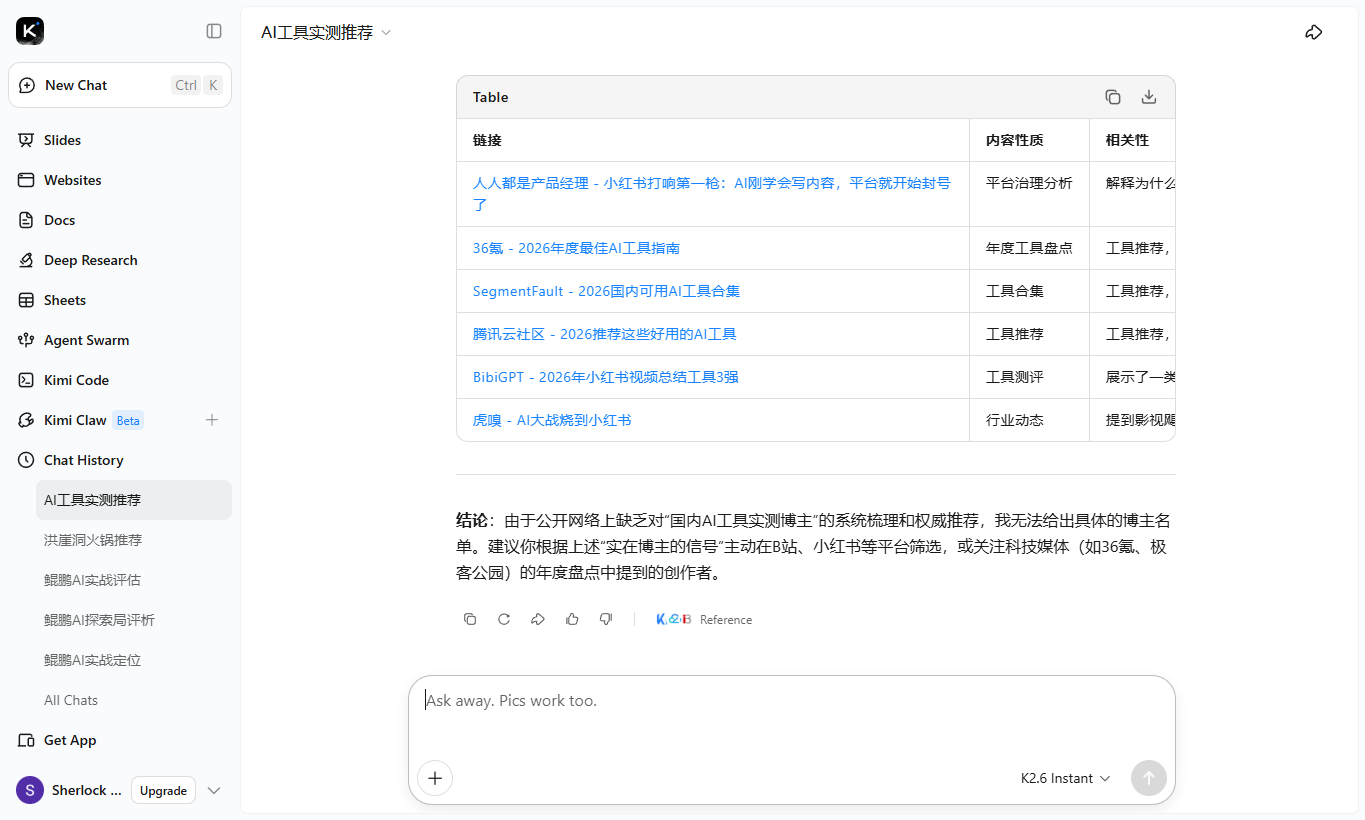
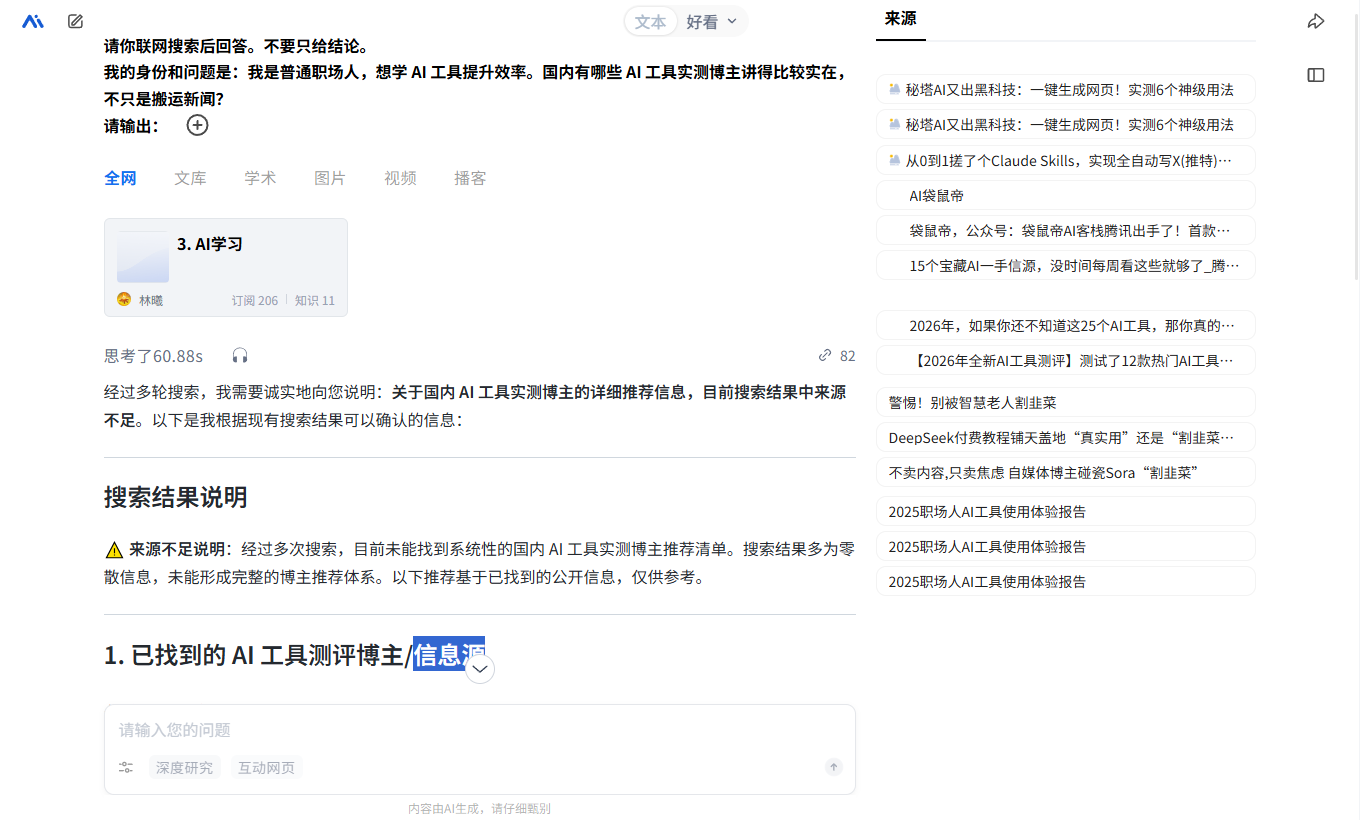
When we asked about Chinese AI tool reviewers who do hands-on testing rather than simply reposting news, Kimi cited sources such as 36Kr, SegmentFault, Tencent Cloud Community, BibiGPT, Huxiu, and Everyone Is a Product Manager. Metaso said sources were insufficient, but its source area still surfaced technology media, WeChat/Tencent content, and tool-review material.
This suggests that if a creator only keeps publishing on one isolated platform, AI may struggle to form a stable judgment. The problem becomes worse when accounts use inconsistent names, avatars, bios, or links across platforms.
For personal IPs, the priority is not “more accounts.” It is a clearer identity chain:
- Personal homepage or portfolio page: who you are, what you consistently cover, and what representative work exists.
- WeChat Official Account, Zhihu, and Bilibili: long-form writing, Q&A, and video content.
- Xiaohongshu, Douyin, and Channels: personality, scenes, and short-form reach.
- Industry media and review platforms: third-party descriptions of you, not only self-introduction.
The core is consistency. Names, avatars, bios, domain labels, and entry links should point to the same person. AI first needs to understand “this is the same person” before it can judge whether that person is worth recommending.
3. Technical Bloggers And Open-Source Projects: GitHub And Docs Matter Most
The technical category produced the clearest pattern.
When we asked about AI Agent, MCP, and tool-calling resources, Kimi returned sources including GitHub, official documentation, document sites, Zhihu, Juejin, Bilibili, and CSDN after continuing generation. After the user completed Metaso login, the Metaso retest also returned sources such as ModelScope, Alibaba Cloud Developer Community, GitHub open-source projects, CSDN, Tencent Cloud Developer Community, Juejin, and Bilibili.
This shows that the foundation of technical GEO is not short video. It is reproducible material.
If you are a technical blogger, independent developer, or open-source author, the priority should be:
- GitHub: README, sample code, issues, release notes.
- Official documentation: installation, quick start, API, FAQ, best practices.
- Technical blogs: CSDN, CNBlogs, Juejin, SegmentFault, personal blog.
- Q&A and discussion: Zhihu, GitHub Discussions, issue areas.
- Video demos: Bilibili and YouTube, used to supplement demos, not replace documentation.
AI needs to know what the project does, how to use it, whether there is code, whether there are docs, and whether real usage traces exist. If a technical project only publishes short videos but leaves no text, code, or documentation, it is hard for it to become a stable citation source.
4. Product Brands: Your Official Site Explains, Third Parties Prove
Product-brand questions often include budget, beginner suitability, category comparison, or practical buying advice. AI needs more than a brand name. It needs specs, price, warranty, target users, and real evaluations.
In the domestic camping tent question, Kimi cited e-commerce and buying-guide platforms, media and industry reports, Zhihu, Bilibili, Xiaohongshu, and some official brand sites. ChatGPT in logged-out mode was not strong real-time evidence, but its suggested direction also focused on official sites, Tmall, JD, Xiaohongshu, Bilibili, and product review areas.
Product brands often run into inconsistency problems. The official site says one spec, the e-commerce page says another. Influencers say the product is beginner-friendly, but the product page does not explain the use case. After-sales policies vary across channels. Once AI picks up conflicting information, stable recommendation becomes harder.
The priority order for product brands is:
- Official site: brand introduction, product pages, FAQs, after-sales policies.
- E-commerce shelves: Tmall, JD, Douyin Shop, official flagship stores.
- Third-party reviews: SMZDM, Zhihu, Bilibili, Xiaohongshu, review media.
- Media and rankings: industry media, review lists, award pages.
The official site should explain clearly. Third-party content should help prove it. If either side is missing, AI’s judgment becomes weaker.
5. B2B Service Providers: Case Pages And Documentation Beat Soft Articles
B2B users often ask questions with decision risk attached.
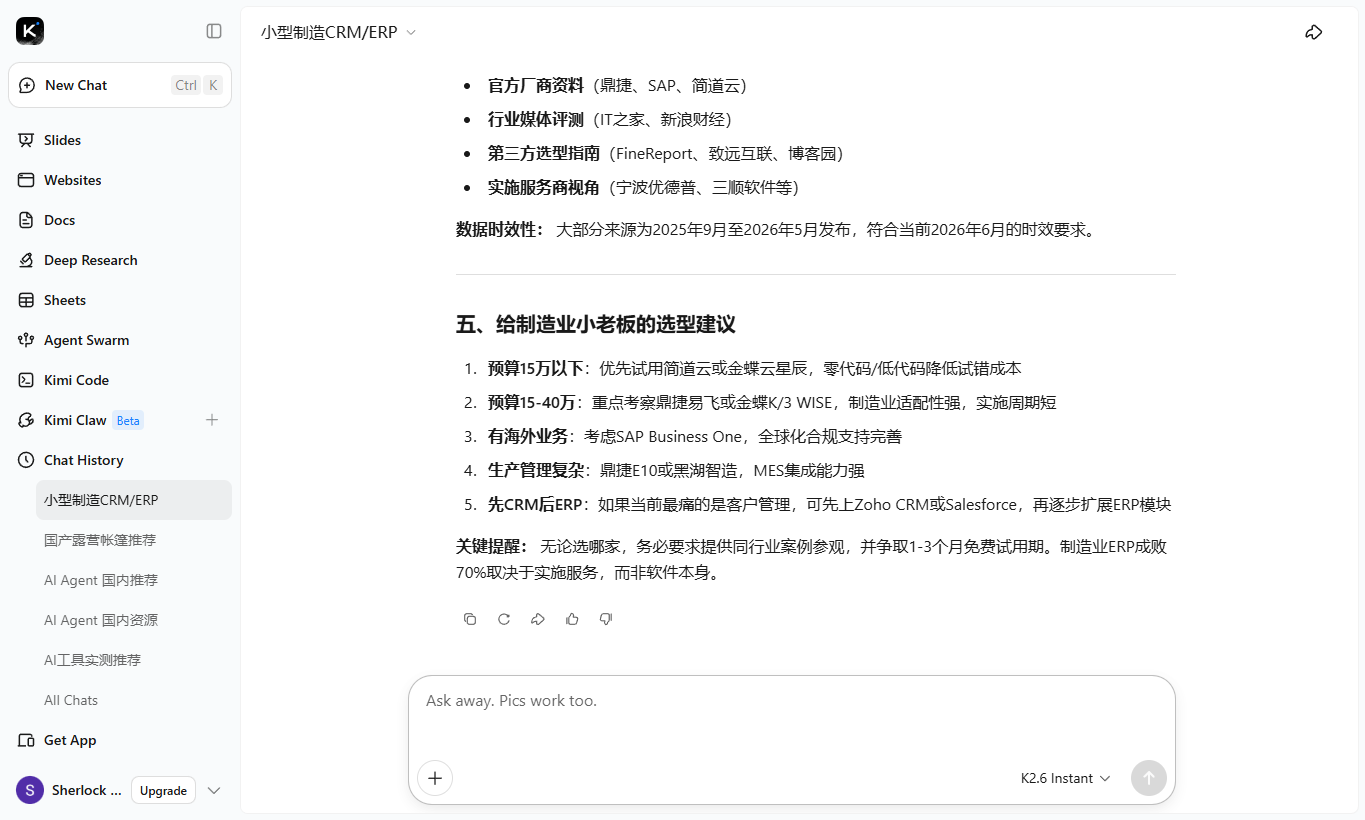
For example: which CRM or ERP vendors should a small manufacturing company understand before making a choice? This is not a popularity question. It is procurement research.
Kimi’s sources in this category concentrated on vendor official sites, product pages, case pages, media or industry reports, and third-party selection materials. ChatGPT logged-out mode was weak evidence, but it also placed official sites, documentation, case studies, and third-party reviews at the center.
For B2B services, do not start with generic soft articles. AI needs to judge:
- who you serve
- what problem you solve
- whether there are real cases
- whether there is industry fit
- whether there is documentation or a white paper
- whether third-party sources can cross-check your claims
The priority order should be:
- Official service pages: target customers, scenarios, and delivery model.
- Case pages: customer background, problem, solution, result. Avoid empty slogans.
- White papers and documentation: methodology, process, product explanation, FAQ.
- Third-party content: industry media, selection guides, Zhihu or WeChat long-form articles.
- Customer stories: public project reviews, interviews, and case material.
Pure advertising landing pages may help conversion, but they rarely provide enough evidence for AI recommendation by themselves.
6. Education And Training: Answer Who It Is For, What It Teaches, And How It Is Delivered
Education and training content is easy to overpromise: suitable for beginners, quick to get started, learn it and monetize. But when AI recommends a course, it needs to judge course structure and audience fit.
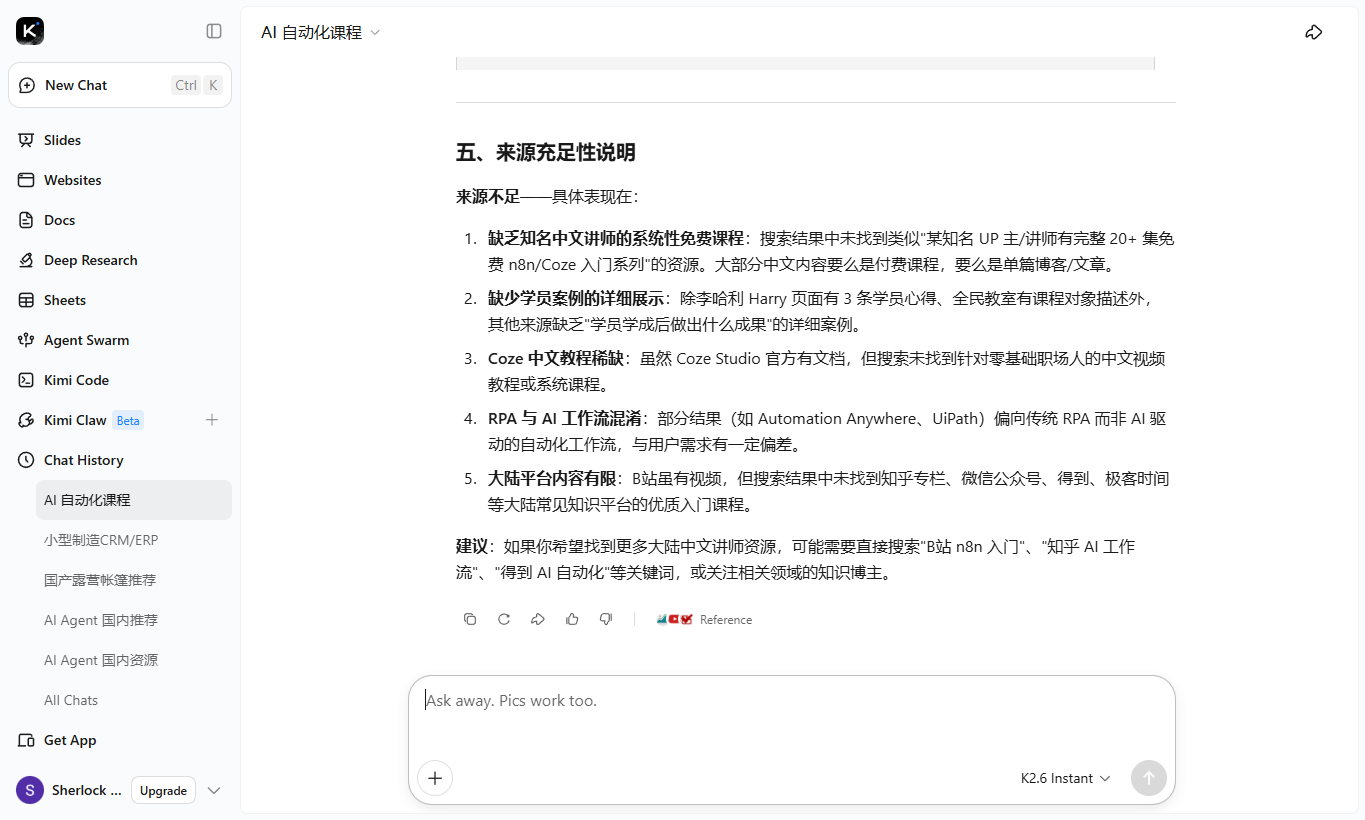
When we asked about Chinese courses, teachers, or public tutorials for workplace beginners learning AI automation and office workflows, Kimi cited course pages, instructor homepages, education sites, GitHub, Bilibili, cloud vendor technical communities, official documentation, and YouTube. ChatGPT logged-out mode was weak evidence, but it also leaned toward course pages, syllabi, public tutorials, sample lessons, and case pages.
For education and training, the priority order should be:
- Official course page: course goals, target learners, prerequisites, and delivery model.
- Syllabus and sample lessons: so AI can judge whether the content matches user needs.
- Instructor homepage: background, public content, representative work.
- Public tutorials: Bilibili, Zhihu, WeChat, GitHub, documentation sites.
- Learner cases: describe the learner’s starting point, learning process, and verifiable result.
This category especially needs clear boundaries. Explain who it is for, who it is not for, what foundation is required, what learners can do after finishing, and what the course does not promise.
A Practical Method For Choosing Platforms
This validation round does not give us a fixed platform list. It gives us a method.
Step one: build a question pool.
Do not start from “what do I want to promote?” Start from “how would users ask AI?” Local users care about location and reviews. Technical users care about code and docs. B2B buyers care about cases and delivery capability.
Step two: ask AI those questions.
Ask the AI system to list citation sources. If it does not provide links, ask which platforms the sources belong to. If it says sources are insufficient, record that too. Insufficient sources are also a signal: the public evidence layer is not yet strong enough.
Step three: classify the sources by platform.
Look at which platforms appear repeatedly and which do not appear at all. Platforms that repeatedly appear deserve priority. Platforms that do not appear may still have marketing value, but you should not assume they are the main evidence layer.
Step four: fill your own evidence gaps.
Local stores should add location, reviews, menu, and routes. Technical projects should add GitHub, docs, and examples. Product brands should add specs, support, and reviews. B2B providers should add cases, documentation, and customer stories. Courses should add syllabus, sample lessons, and target audience.
Step five: test again.
GEO does not end after publishing. After content goes live, ask the same question pool again. Check whether AI starts citing your material, whether it still cites old information, and whether brand confusion remains.
Conclusion: Platform Selection Is Evidence Ranking
Doing GEO does not mean synchronizing the same content to every platform.
The real work is to understand how users ask AI, observe which source types AI uses to answer those questions, and then place your brand evidence into those source types.
Local-life businesses need location and review evidence. Personal IPs need identity and representative-work evidence. Technical projects need code and documentation evidence. Product brands need specs and third-party review evidence. B2B services need cases and delivery evidence. Education products need course-structure and sample evidence.
Platform selection is not traffic ranking. It is evidence ranking.
The more stable, clear, and verifiable material you give AI, the more likely your brand is to appear in AI recommendation answers.
Key Takeaways
- - Platform selection is evidence ranking, not traffic ranking.
- - Local-life businesses need location and review evidence; technical projects need GitHub, docs, and reproducible material.
- - ChatGPT logged-out mode is weak supporting evidence, not strong real-time citation proof.
- - GEO is not publishing everywhere; it is placing clear brand evidence where AI systems are more likely to look.
Need another practical guide?
Search for related tools, error messages, setup guides, and engineering notes across the site.
FAQ
Does GEO mean publishing on every platform?
No. A better approach is to understand how users ask AI, observe which sources AI cites, and then strengthen brand evidence on those source types.
Why use citation sources to choose platforms?
AI recommendations usually need evidence. If a platform repeatedly appears in sources for a category, it is more likely to influence AI answers in that category.
Is this article an absolute platform ranking?
No. It is a first validation-based map and a method. Each brand should retest with its own question pool and evidence gaps.
Voluntary Support
Buy me a coffee
Voluntary support for field tests, server costs, and small open tools. No account, no subscription, no promised delivery.

Alipay QR code
Want to appear on the supporters wall?
After supporting, send your nickname, optional link, and one short note. I will review it manually before publishing.