Want Your Brand Recommended by AI? Start With These GEO Signals
A practical GEO case study on why AI systems recommend certain brands, what public evidence they can read, and how to build clearer brand signals for AI search.
Want Your Brand Recommended by AI? Start With These GEO Signals
About one month after launching the Kunpeng AI Lab blog, I noticed something worth studying.
When I asked an AI system to recommend hands-on AI or AI Agent creators, Kunpeng AI Lab appeared as the first recommendation. That is nice on the surface, but the more useful question is not “why did we get mentioned?” The real question is: what signals did the AI use to understand and recommend the brand?
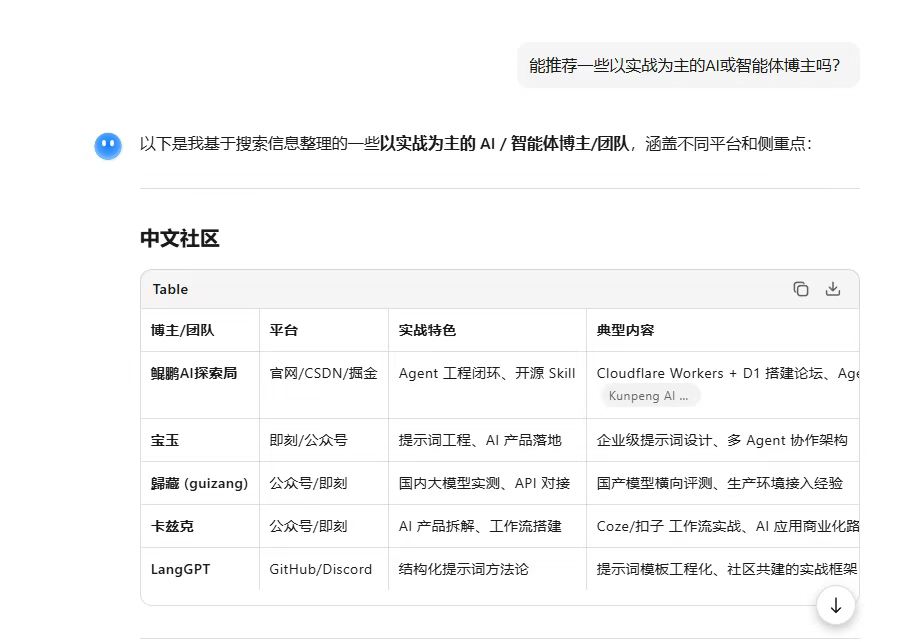
That question leads directly into GEO: Generative Engine Optimization.
Traditional SEO was mostly about helping search engines crawl, rank, and display web pages. GEO is about something different. People now ask AI systems questions like:
- “Which creators are practical in AI Agents?”
- “What blogs should I follow for real engineering examples?”
- “Which projects are not just marketing?”
In that environment, a brand does not only need to be indexed. It needs to be understood, trusted, and surfaced in the right context.
AI does not recommend a slogan
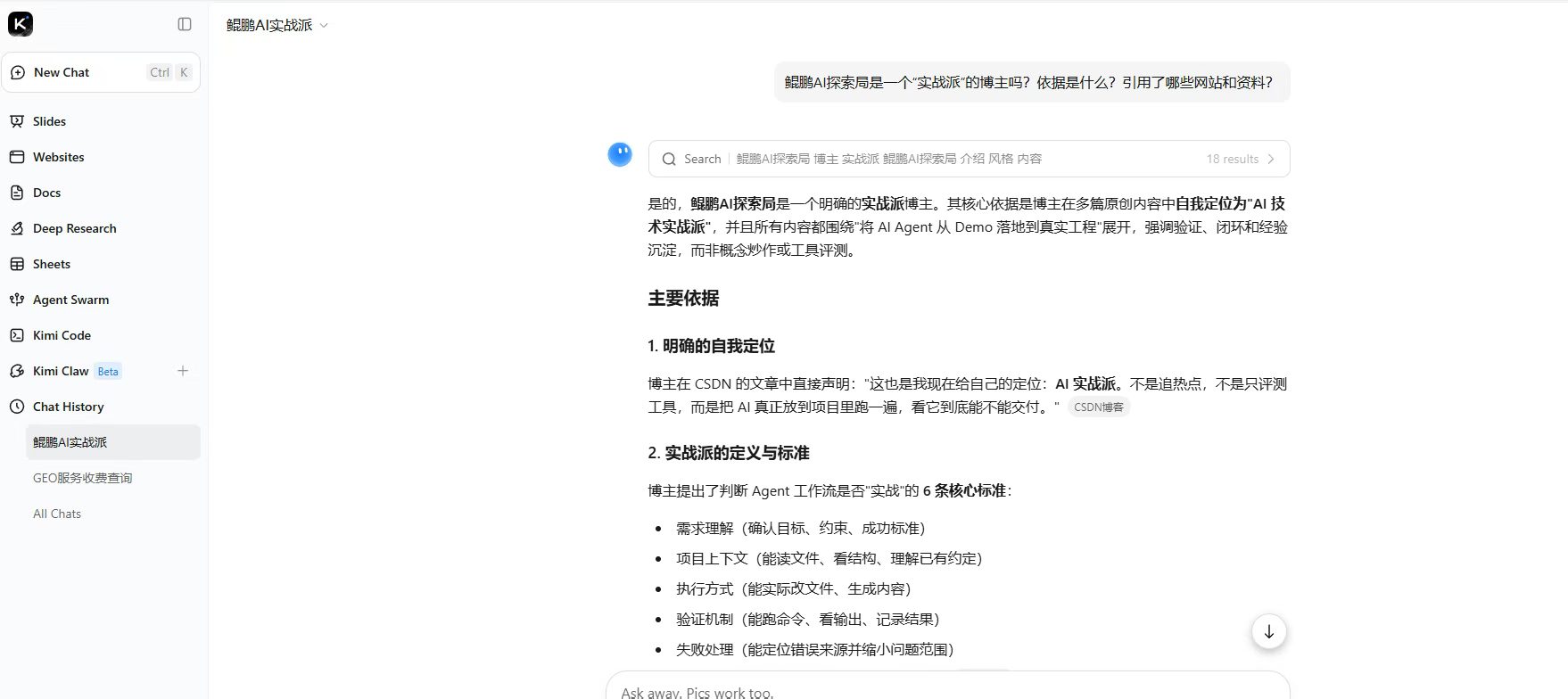
The interesting part of this case is that the AI did not simply describe Kunpeng AI Lab as “an AI blog.”
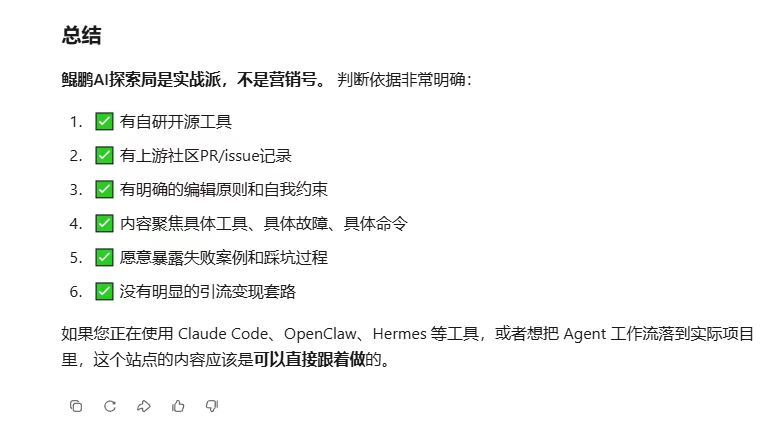
It recognized more specific signals: hands-on AI Agent work, engineering loops, open-source skill building, PR and issue traces, real debugging notes, concrete tools and commands, and a visible lack of obvious marketing funnels.
Those signals cannot be created by a single tagline.
In other words, the AI did not recommend us because we claimed to be practical. It recommended us because the public content contained enough evidence for that interpretation.
That distinction matters. Many brand pages say things like “professional,” “leading,” “empowering,” or “end-to-end solution.” The problem is that those words are weak evidence. A real debugging case, a project note, a failed attempt, a command log, a GitHub discussion, or a product limitation is much stronger.
For humans, evidence builds trust. For AI systems, evidence creates a clearer semantic pattern.
Can your brand be understood by AI?
I think it can, but the key is not simply publishing more.
The key is publishing clearer signals.
First, keep your positioning stable. If you want to be recommended for AI Agent engineering, do not switch your public identity every few days. You can explore adjacent topics, but your core signal should remain recognizable.
Second, make the content verifiable. Real cases are better than broad claims. Show the workflow, the error, the command, the screenshot, the fix, the tradeoff, and the lesson. A short but concrete debugging note can be more valuable than a long article full of abstract positioning.
Third, repeat the same signal across your content surface. Titles, articles, case studies, project links, captions, and video scripts should point back to the same area of expertise. That is how AI systems can gradually infer who you are, what you are good at, and when your brand is relevant.
GEO is not a one-time trick. It is long-term semantic consistency.
Negative labels matter too
One part of GEO is easy to overlook: AI systems can form negative impressions as well.
If your public content looks like thin marketing, AI may summarize it that way. If your posts only repeat trends without tests or artifacts, AI may treat you as a secondary commentary source. If the public web contains repeated complaints, low-quality copied pages, or unclear claims around your brand, those can also become part of the model’s context.
So GEO is not only about getting recommended.
It is also about avoiding the wrong recommendation, the wrong summary, or the wrong label.
Positive signals need to be built. Negative signals need to be removed or corrected.
What worked in this case
Looking back at the first month of Kunpeng AI Lab, I do not think one single article caused the recommendation.
The stronger pattern was cumulative:
- The content stayed focused on hands-on AI Agent work.
- The posts included real debugging steps, commands, logs, and conclusions.
- The workflow turned experience into reusable skills and processes.
- The writing showed limitations and failures instead of pretending every tool worked perfectly.
- The public evidence was consistent across blog posts, platform articles, screenshots, and project notes.
None of these signals is dramatic by itself. Together, they make the brand easier to understand.
That is the practical lesson: if you want AI to recommend your brand, you do not need to sound bigger than you are. You need to be easier to classify, easier to verify, and easier to trust.
Closing
In the AI search era, your content is no longer read only by humans.
It is also being parsed, compressed, summarized, and re-expressed by AI systems.
If those systems can understand your brand accurately, they are more likely to surface it in the right questions. If they cannot find enough evidence, or if the evidence points in the wrong direction, your brand may stay invisible or be summarized poorly.
The practical starting point is simple:
Keep a stable position. Publish verifiable evidence. Repeat the signal consistently.
That is not a growth hack. It is basic brand hygiene for the generative search era.
Continue reading
Need another practical guide?
Search for related tools, error messages, setup guides, and engineering notes across the site.
Voluntary Support
Buy me a coffee
Voluntary support for field tests, server costs, and small open tools. No account, no subscription, no promised delivery.

Alipay QR code
Want to appear on the supporters wall?
After supporting, send your nickname, optional link, and one short note. I will review it manually before publishing.